

Project goal
The main goal of this project was to organize an efficient heating system in a house with an area of 110 sq. m, providing a comfortable microclimate with minimal energy costs.
To achieve this goal, it was chosen Thermal pump Raymer Ray-10DS2-EVI as the main source of heat, and the main heating system was a warm floor. This approach allows you to distribute heat evenly throughout all rooms, providing stable temperature and comfort for residents.
The installation of the heated floor and its connection to the heat pump was carried out taking into account modern energy efficiency standards, allowing for the most efficient use of energy and optimization of heating costs.
Why is the underfloor heating system in such demand among other heating systems??
Modern heating technologies are aimed at creating a comfortable indoor microclimate with minimal energy consumption. One of the most effective and popular solutions is a heated floor system., which has significant advantages over traditional heating methods, such as radiators or convectors. This technology combines efficiency, comfort and aesthetics, which makes it popular among owners of houses and apartments.
The main advantages of heated floors
Uniform heat distribution throughout the room
The main difference between underfloor heating and radiator heating is the uniform heating of the entire area of the room.. Heat spreads from bottom to top, which ensures optimal temperature distribution:
-
in the foot area - comfortable +22…+24°C,
-
at head level - about +18…+20°C.
This natural distribution of heat helps to increase comfort and reduce the risk of colds, since there are no overheating or cold zones, As in the case of traditional radiators.
Energy efficiency and saving of heating costs
The heated floor system operates at low temperature of the coolant (30–40°C), Whereas radiator systems require water, heated to 60–70°C. It means, that it requires less energy for its work, So, heating costs can be reduced by 20–30%.
Warm floors are ideal for use with heat pumps, which demonstrate the highest efficiency precisely with low-temperature heating. Thanks to this 1 kW consumed electricity can generate up to 4-5 kW of heat, which makes the system extremely economical.
Comfort and healthy microclimate
Unlike radiators, who create convection air currents and raise dust in the room, heated floor heats the surface directly. This reduces the movement of air masses and helps maintain clean air, what is especially important for people, suffering allergies or asthma.
Besides, There are no temperature changes in rooms with heated floors, so you can walk comfortably in cold weather barefoot, which is a nice bonus for residents.
No visible heating elements
Warm floor hidden under the covering, which allows you to completely remove radiators and create aesthetically attractive interior. Thanks to this, you can choose furniture without restrictions, decor and style of the room, not taking into account the location of the batteries.
This is especially appreciated in modern minimalist interiors, where every detail matters.
Durability and minimum maintenance
The heated floor system has long service life – on average more 50 years with proper installation. Unlike radiators, who can leak, corrode or get clogged from the inside, heated floors require virtually no maintenance.
Thanks to the lack moving parts and reliable pipes (polyethylene or metal-plastic), the system remains highly efficient for decades.
Possibility of zone temperature control
In a heated floor system you can install Individual thermostats for different rooms. This allows:
-
install different temperature in every room,
-
Disconnect heating in rooms, which are not used,
-
Save energy without compromising comfort.
Due to this, the temperature in each zone is controlled separately, which provides additional benefits in energy conservation.
Why is a warm floor it works best with a heat pump?
Warm floor and Heat pump – an ideal combination for energy-efficient heating. Both systems work on the principle low temperature heating, which saves energy, comfortable microclimate and uniform heat distribution. Let's consider, why a heat pump is the best heat source for a heated floor system.
1. Efficiency with low temperature heating
The heat pump operates most efficiently at the coolant temperature 30–45°C, which is ideal for heated floors.
For comparison:
-
Radiator heating requires 60–70°C, which significantly reduces the efficiency of the heat pump.
-
Warm floor operates at temperature 30–40°C, which allows the heat pump to work with maximum productivity and minimal electricity costs.
Thus, combination warm floor and heat pump minimizes heating costs and ensures high efficiency of the entire system.
2. High coefficient of useful action (COP)
Heat pumps have COP (Coefficient of Performance) in the range 3-5, i.e with 1 QW of electricity generate 3-5 kW of thermal energy.
Low -temperature system, such as warm floor, allows Increase COP, Since the heat pump should not overheat the coolant to high temperatures. This enables significantly reduce electricity consumption compared to other types of heating.
3. Even distribution of heat
Unlike radiators, which create convection currents (warm air rises, and the cold remains below), warm floor heats evenly over the entire area of the room.
Connection with a heat pump provides:
Stable temperature regime without sudden changes.
Absence of cold zones in the room.
Comfortable microclimate, because heating occurs naturally.
This is especially important in large rooms and houses with good thermal insulation.
4. Savings in heating costs
A warm floor with a heat pump allows save up to 50% on heating compared to electric boilers or gas systems.
Causes of economy: Lower electricity consumption due to the high efficiency of the heat pump. Reduction of heat loss thanks to the even distribution of heat in the room. Automation of work – modern heat pumps support intelligent control and adapt to user needs.
High -action coefficient (COP)
Heat pumps have COP (Coefficient of Performance) in the range 3–5, that is, with 1 kW they generate electricity 3–5 kW thermal energy.
Low temperature system, such as warm floor, allows you to increase COP, since the heat pump does not need to overheat the coolant to high temperatures. This allows you to significantly reduce energy consumption compared to other types of heating.
Even heat distribution
Unlike radiators, which create convection currents (warm air rises, and the cold one remains at the bottom), warm floor heats evenly over the entire area of the room.
The combination with the heat pump provides:
-
Stable temperature regime without sharp differences.
-
Lack of cold zones in the room.
-
Comfortable microclimate, since heating occurs naturally.
This is especially important in large rooms and houses with good thermal insulation.
Saving heating costs
Warm floor with heat pump allows you to save up to 50% on heating compared to electric boilers or gas systems.
Reasons for savings:
- Lower energy costs thanks to the high efficiency of the heat pump.
- Reduced heat loss due to uniform heat distribution in the room.
- Automation of operation - modern heat pumps support intelligent control and adapt to user needs.
Environmental friendliness
Heat pumps use renewable energy (air, water or soil) and reduce emissions CO₂ compared to traditional heat sources.
Combination of underfloor heating with a heat pump: Reduces environmental impact. Uses minimal amount of electricity. Operates without harmful emissions.
This is the ideal solution for passive and energy efficient houses.
Comfortable control and automation
Modern heat pumps have Wi-Fi control, which allows: Control the temperature remotely via smartphone. Automatically adjust power based on weather. Save energy by adapting to usage patterns.
Warm floor may also have smart zonal control, which allows: Set different temperatures in different rooms. Turn off heating in separate rooms, if they are not used. Optimize energy costs, adjusting the mode of operation for the needs of residents.
Long life and minimum maintenance
Heat pumps have a service life from 15 to 25 years.
Warm floor serves more 50 years with proper installation.
Unlike radiator heating or gas boilers, Heat pump and warm floor do not require frequent maintenance and work smoothly for decades.
Stages of completed work
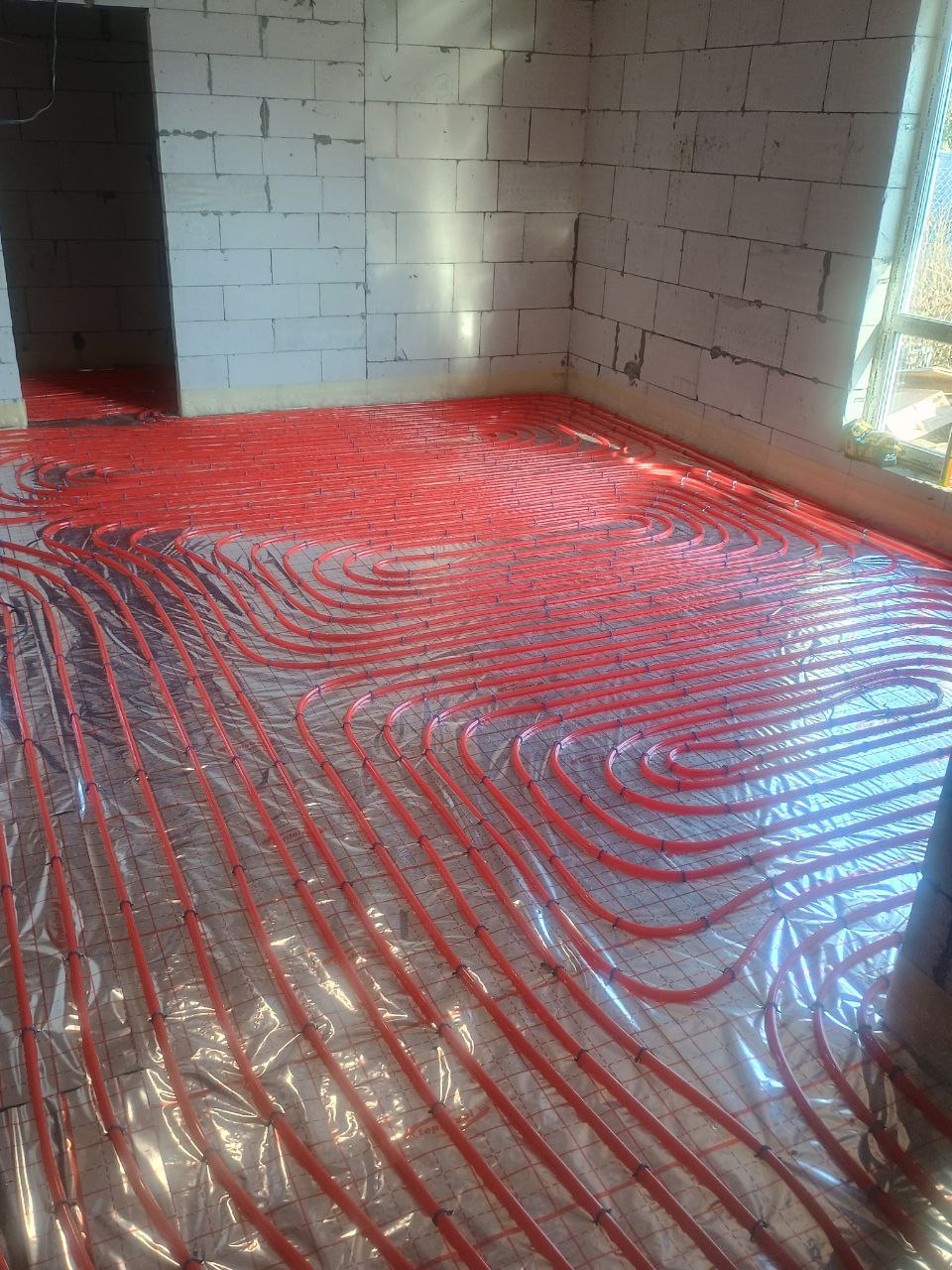
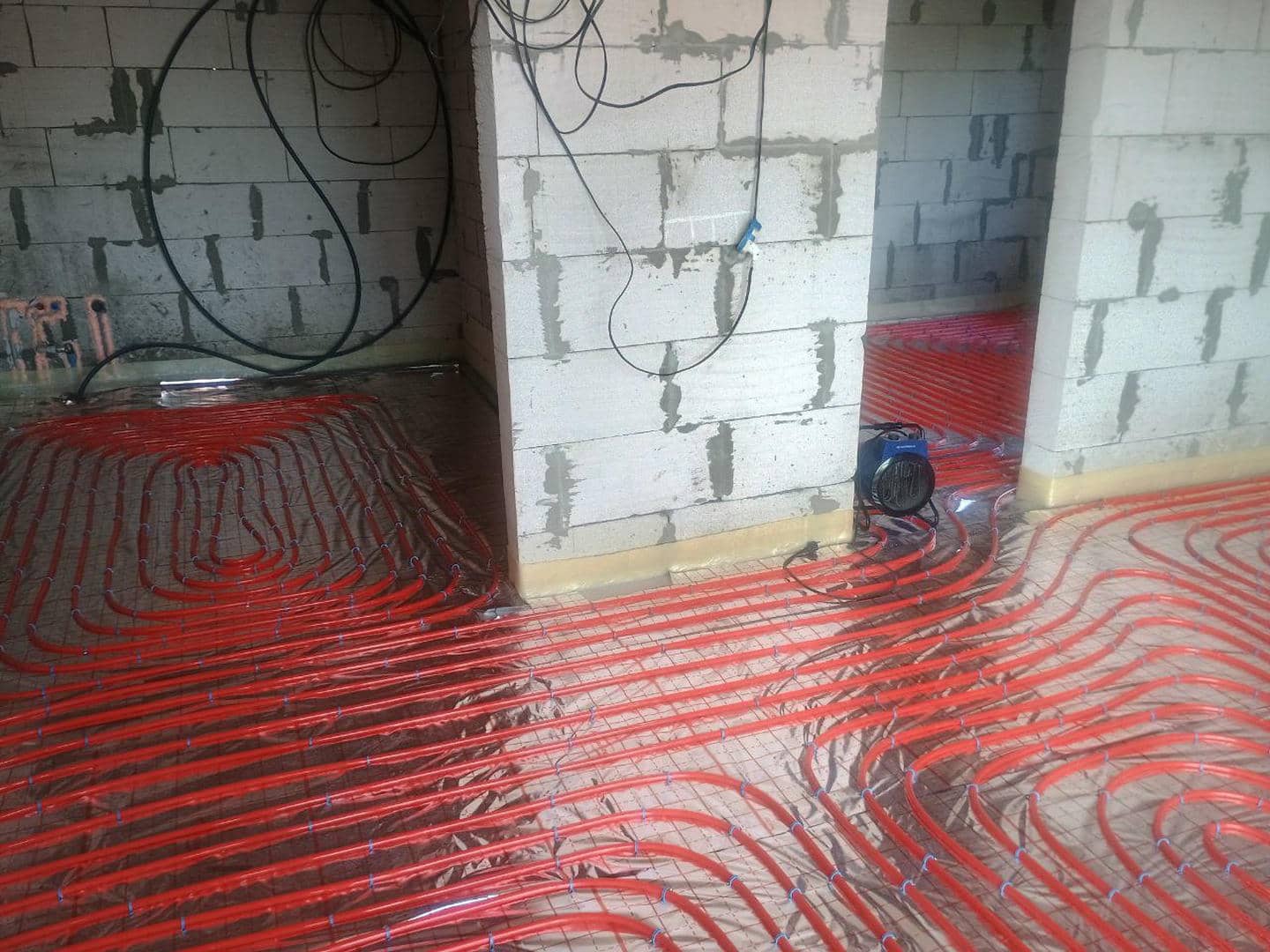
1. Installation of a warm floor
Laying a warm floor is a key step in creating an energy -efficient heating system, especially in combination with a heat pump. Features of the installation of a warm floor include several important aspects.
The first step is to prepare the base: the draft floor is cleaned of dust and garbage, After which the waterproofing film is laid, which prevents the penetration of moisture into the structure. Next, the thermal insulation layer is mounted (Extruded polystyrene foam), which minimizes thermal losses down and contributes to uniform heat distribution.
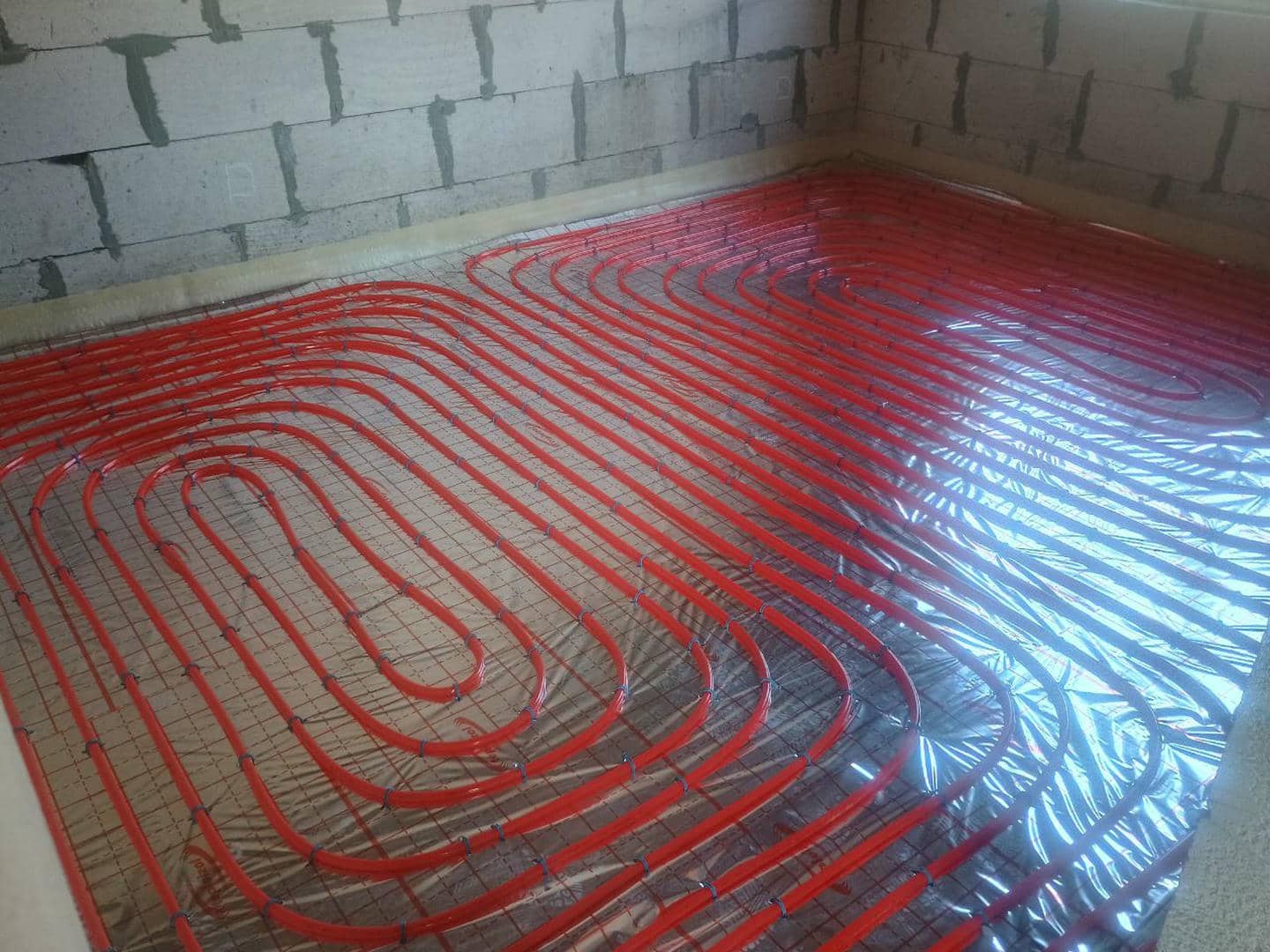
A reinforcing mesh or special mounting mats laid on thermal insulation, facilitating pipeline fastening. Pipes are laid in the form of a spiral for uniform heat distribution. Optimally posted a step of laying 10-20 cm for the distribution of thermal load.
Pipelines are fixed to the reinforcing mesh or mounting strips with special screeds or clips. An important step is to check the tightness of the system by filling it with water and undergoing crimping under increased pressure, which allows you to identify possible leaks before pouring the screed.
After a successful check, a damping tape is laid around the perimeter of the room to compensate for the temperature expansion, and then the concrete screed is filled with thickness 5-7 cm with the addition of plasticizers to increase the strength and elasticity of the coating.
The final commissioning of the warm floor is carried out after the screed is completely dried up, What usually takes 28 days. After this, you can run the system in test mode with a gradual increase in temperature to avoid cracking of the concrete coating.
2. Installation of a heated floor comb.
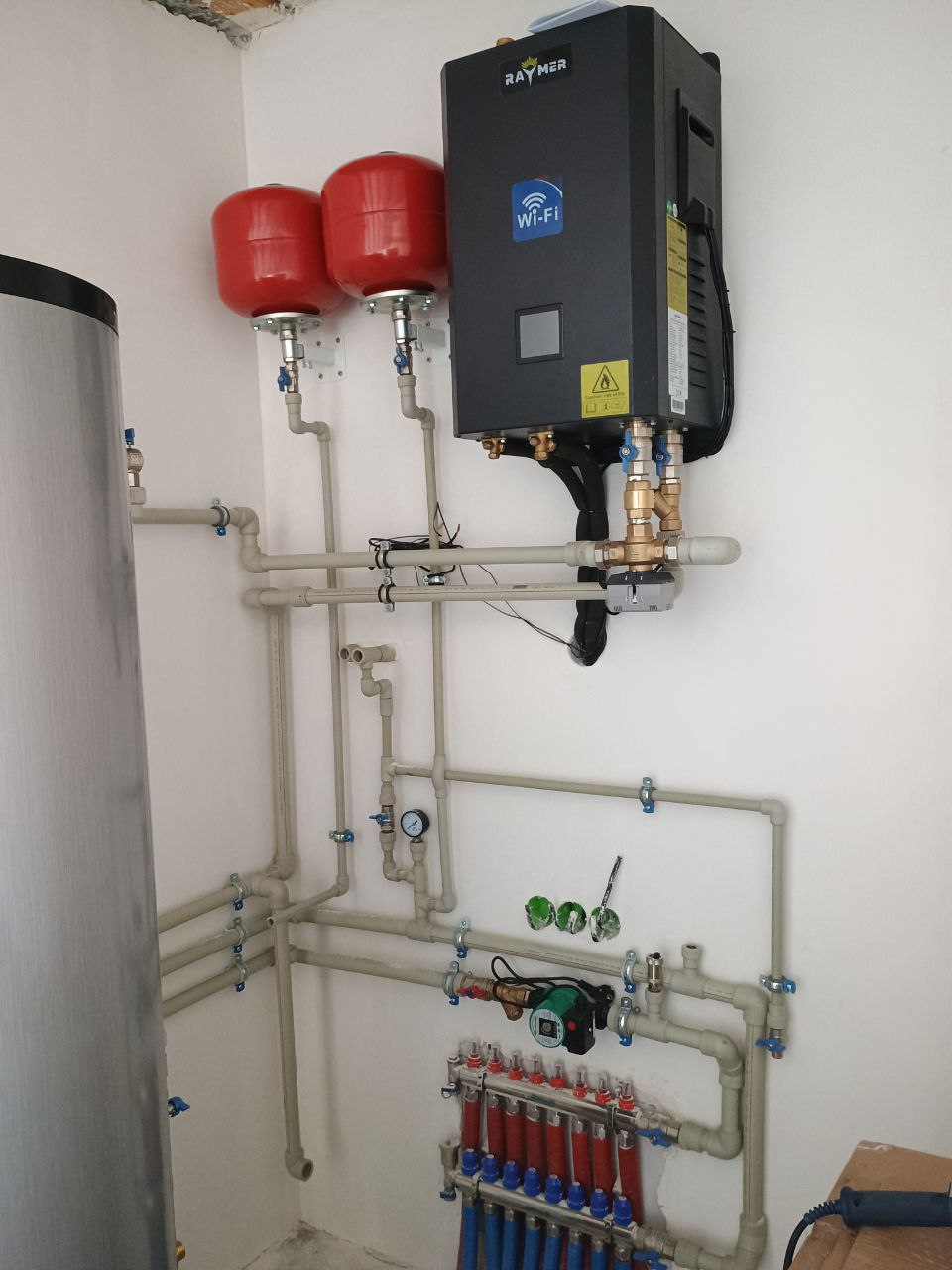
Connecting pipes to the heated floor comb is an important step in the process of installing a water heating system. comb (collector) ensures uniform distribution of coolant between the circuits and allows you to regulate their temperature.
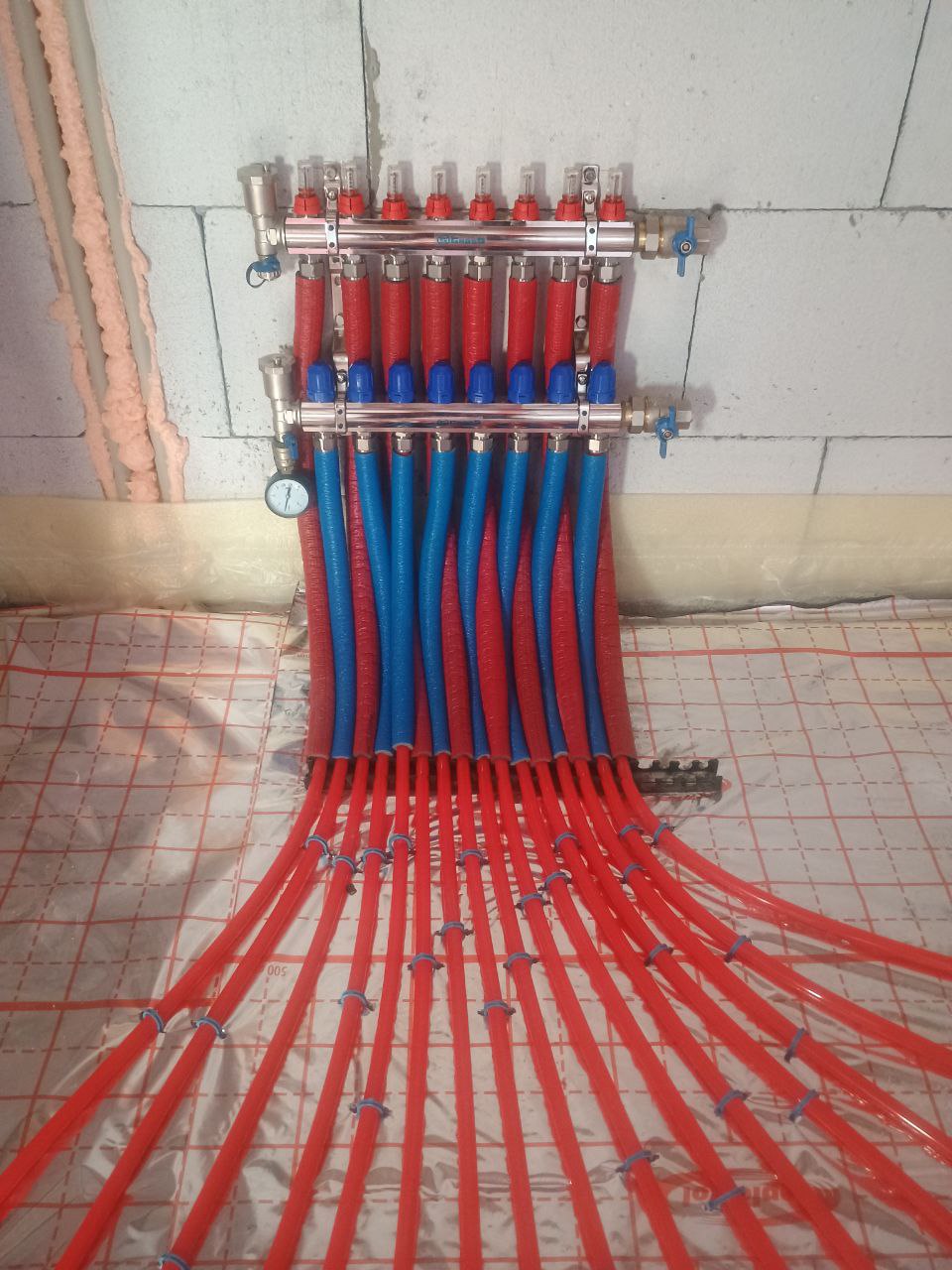
Before connection, the circuits are marked, to avoid confusion during further balancing of the system. Pipelines, which go from each circuit of a warm floor, Back on a special mounting panel. Polyethylene pipes are used, which join the comb using European -blooded fittings or compression compounds.
The supply of the coolant is carried out through the supply comb, and the reverse flow returns through the reverse comb. Certifers are installed on the feed part, which allow you to visually control the supply of water to each outline. Thermostatic valves or servos can be installed on the return comb to automatically regulate the temperature of individual zones.
Before final connection, the entire system is pressure tested under high pressure., to identify possible leaks. After this, the balancing valves are adjusted, to ensure uniform heating of each circuit. As a result, the system works efficiently, evenly distributing heat throughout the entire area of the room.
 3. Concrete filling of warm floor communications
After connecting the pipes to the comb a warm floor and checking the tightness of the system, the following stage is performed - filling the finish coating with a concrete screed.
The minimum thickness of the screed is 5-7 cm above the pipe level. Important, so that in the process of filling the pipes are under pressure, to avoid deformations and damage.
After the screed is completely dried, the warm floor is launched, first at low temperatures, Gradually increasing heating. Then you can lay the final coating - tiles, laminate or other materials, compatible with underfloor heating.
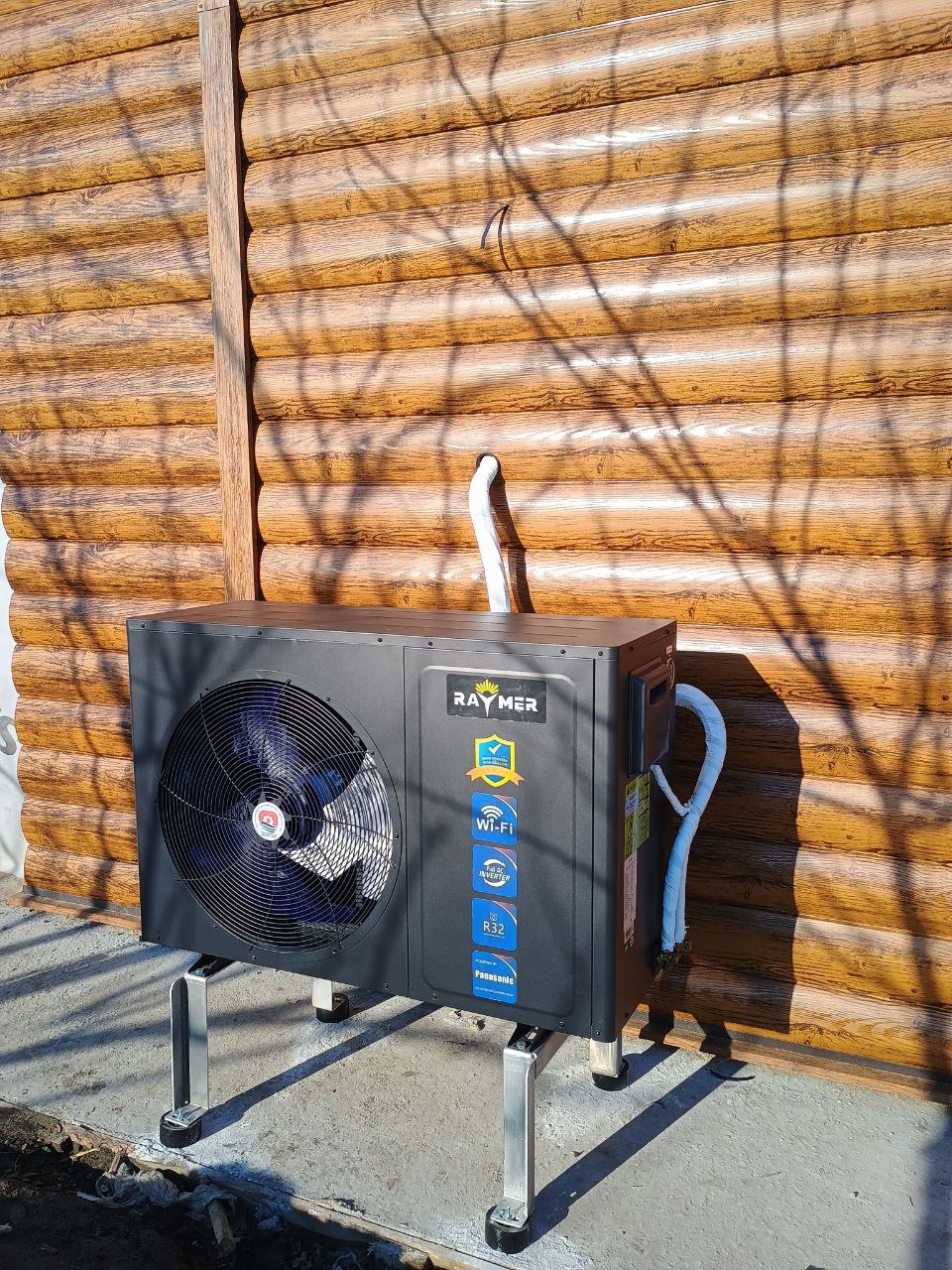
4. Installation of the outer heat pump unit
After pouring the heated floor screed, while it dries, The outdoor unit of the heat pump is being installed. It is important to ensure sufficient air exchange, therefore, the unit is installed in compliance with the minimum distances to walls and obstacles, and also taking into account the direction of the release of warm air.
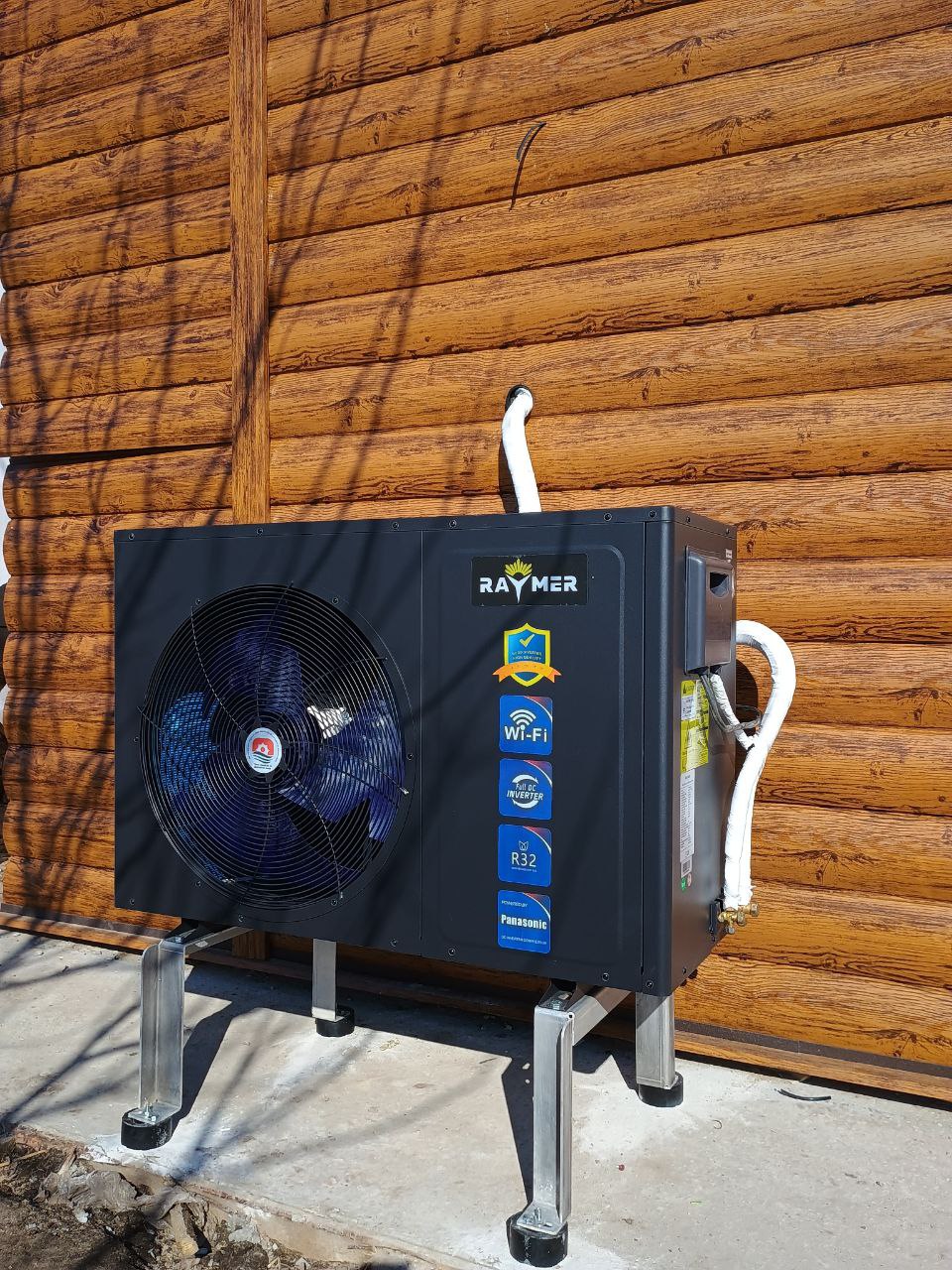
To reduce vibrations, the outdoor unit is mounted on anti-vibration supports.
Next, we laid the main refrigerant pipes between the outdoor and indoor units of the heat pump, as well as thermal insulation to prevent heat loss. Pipelines were connected to the hydraulic module and the hybrid tank in the house.
Electrical power and control cables installed, It is also possible to connect a Wi-Fi module for remote control.
Before starting, the system is filled with refrigerant, vacuum is performed to remove air and moisture from the circuits, checking the tightness of connections. After this, a test run of the outdoor unit is performed to check the correct operation and system parameters.
5. Installation of the heat pump indoor unit
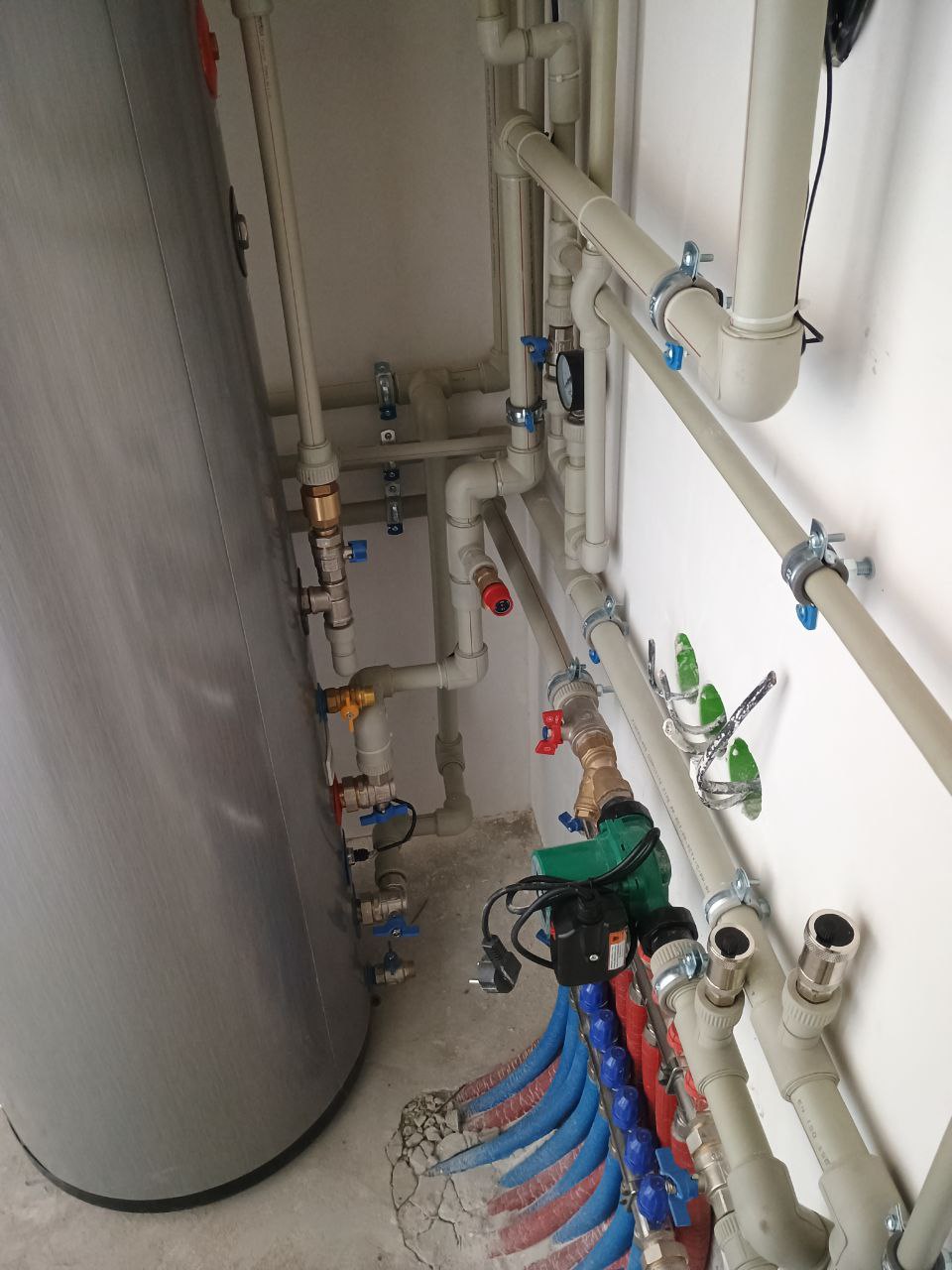
The hydraulic module was installed, which was integrated into a compact boiler room.
Since the space was limited, the boiler room was designed as ergonomically as possible in a special niche. In the future, this niche will be designed as a wardrobe, which will allow you to hide technical equipment and at the same time provide convenient access for maintenance.
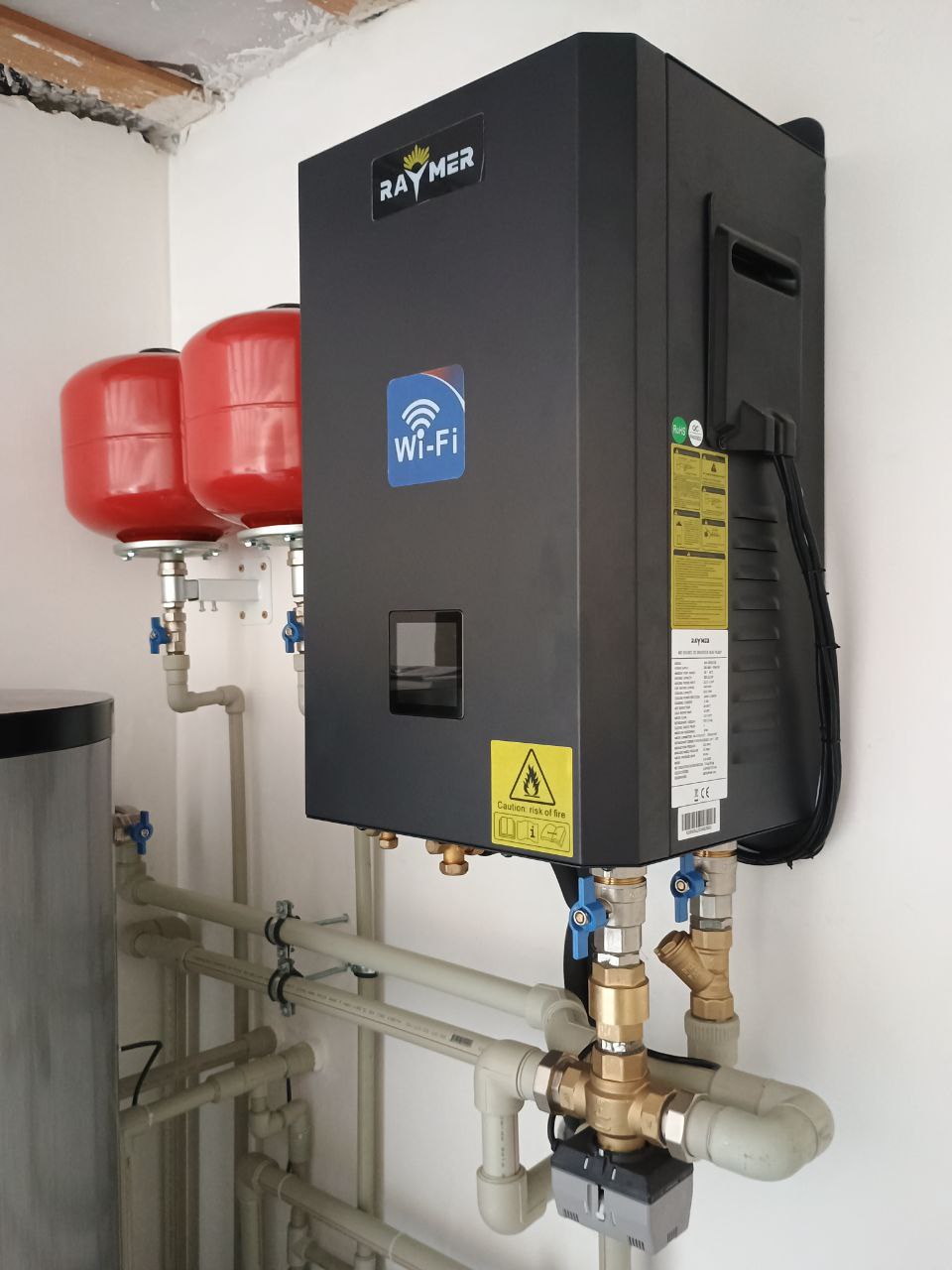
When installing the hydraulic module, we took into account the need for convenient connection to the heating and hot water supply system.
All pipelines were laid using modern thermal insulation to reduce heat loss and increase energy efficiency. Installation involved minimal use of space, therefore, the pipe routing is made with maximum compactness, which allows you to effectively arrange all the necessary elements of the system without overloading the space.
For convenient control and monitoring of the system operation, the hydraulic module is equipped with a touch panel with the ability to connect to Wi-Fi, which allows you to remotely control the settings through a mobile application.
Access to the main nodes for fast maintenance is also provided, And all connections are made using high -quality locking valves, which simplifies possible repair work.
6. Installation of a tank hybrid
As part of the project, a hybrid tank was installed Raymer DHW180L + buffer 65L (stainless) volume 250 l for integration with heat pump and underfloor heating system. The choice of this solution was driven by the need to save space and ensure efficient heating and hot water supply in conditions of limited space.
This tank acts as a heat storage and buffer, ensuring system stability, which reduces energy costs and extends equipment life.
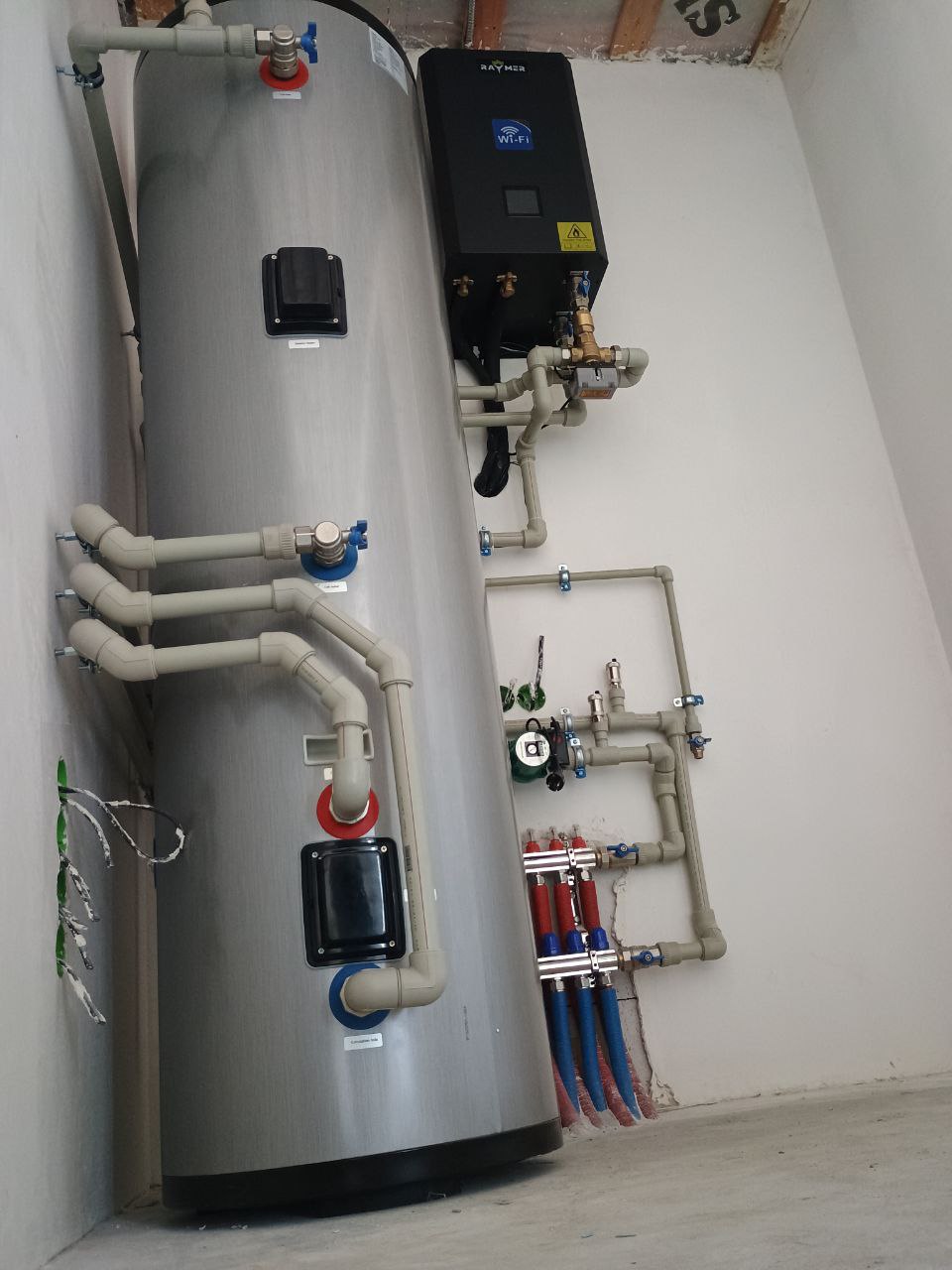
The principle of operation of a hybrid tank:
The hybrid tank performs several important functions:
Heat accumulation: The heat pump transfers heat to the tank, where it accumulates for further use in the warm floor system. This allows for uniform heating of the premises, Even when the heat pump does not work at maximum power.
Buffer capacity: The tank acts as a buffer, aligning temperature fluctuations in the system. This avoids frequent inclusions and shutdown of the heat pump, which increases its effectiveness and extends the service life.
Hot water supply: In addition to heating, Hybrid tank provides hot water for household needs, such as shower or kitchen. This allows minimizing the need for individual boilers or gas boilers.
Features of the installation of a hybrid tank:
Due to the limited space in the technical premises of the house, a compact hybrid tank volume was chosen 250 l. This allows you to maintain free space for other elements of the system.
The tank was installed in a specially designated niche in the basement, where it is easily accessed for maintenance and repair.
Putting to a heat pump and a warm floor:
The tank was connected to the heat pump using special pipelines for supply and return flow of coolant.
The underfloor heating system is connected to the tank through collectors, which allows you to distribute heat evenly throughout all rooms of the house.
Correct temperature and pressure settings:
After installation, temperature sensors and circulation pumps were adjusted to ensure optimal system operation. The heat pump and a hybrid tank are operated synchronously to ensure a stable temperature regime in the house.
The pressure in the system was verified and configured in accordance with the technical requirements of the manufacturer.
Ensuring access for service:
For the convenience of maintenance and repair, The tank was installed like this, to provide easy access to all its parts. This allows you to quickly clean, verification or replacement of components if necessary.
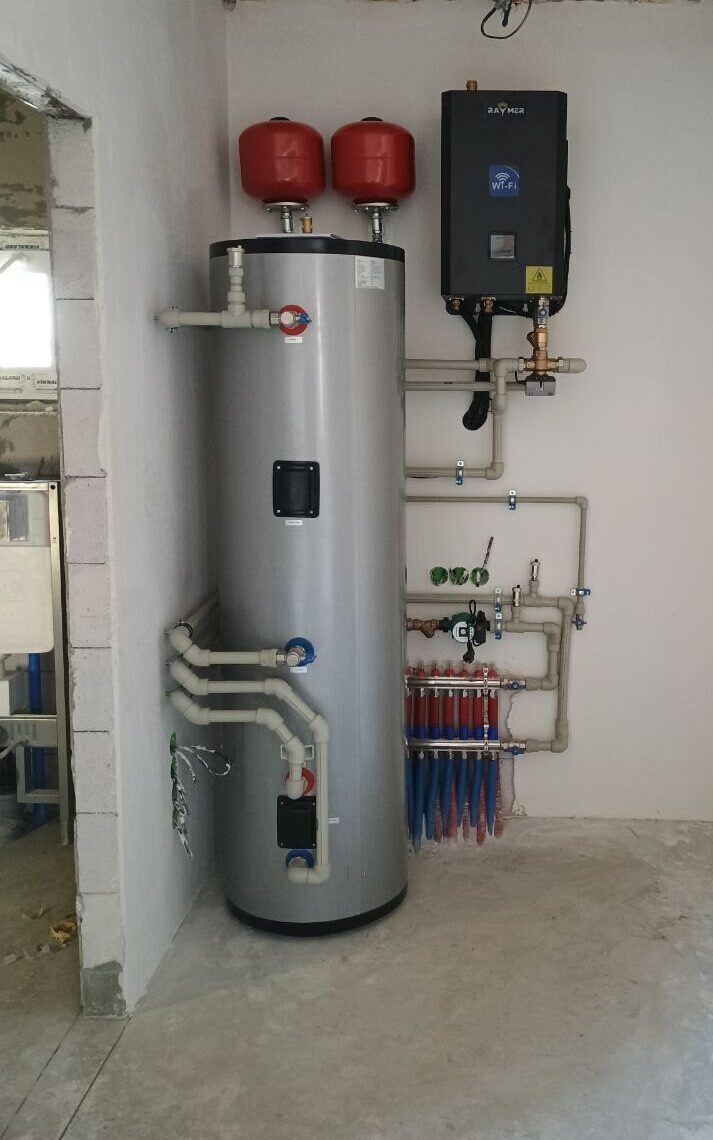
Checking and starting the system
Before starting the heat pump, a thorough check of all components was carried out to ensure the proper operation and efficiency of the system into the heating system with a warm floor..
Installation check
All pipelines, Connections and fittings were checked for the correct connection and tightness. No water leaks were found, The system is sealed.
Checking connections and settings
The heat pump was correctly connected to the warm floor system, The settings of temperature sensors and circulation pumps were performed correctly. The system is ready to work.
Checking electrical connections
Electric components, including heat pump and circulation pumps, were connected correctly. Grounding and protection against overstrain is checked.
Checking filters and heat exchangers
Filters and heat exchangers are cleaned, The system is checked for pollution. The coolant meets the requirements of the manufacturer.
Verification of work under pressure
The system was launched and checked at the working pressure. Temperatures and supply of the coolant are normal, There were no leaks and malfunctions in the operation of the pumps.
Checking the warm floor
The warm floor system was tested, heat is evenly distributed throughout the rooms. The floor temperature is within normal.
System setting
After checking and testing, all system settings, Including the schedule of the heat pump, were made to ensure optimal efficiency.
After all inspections, the system is ready for a full -fledged launch in operation.


