Task
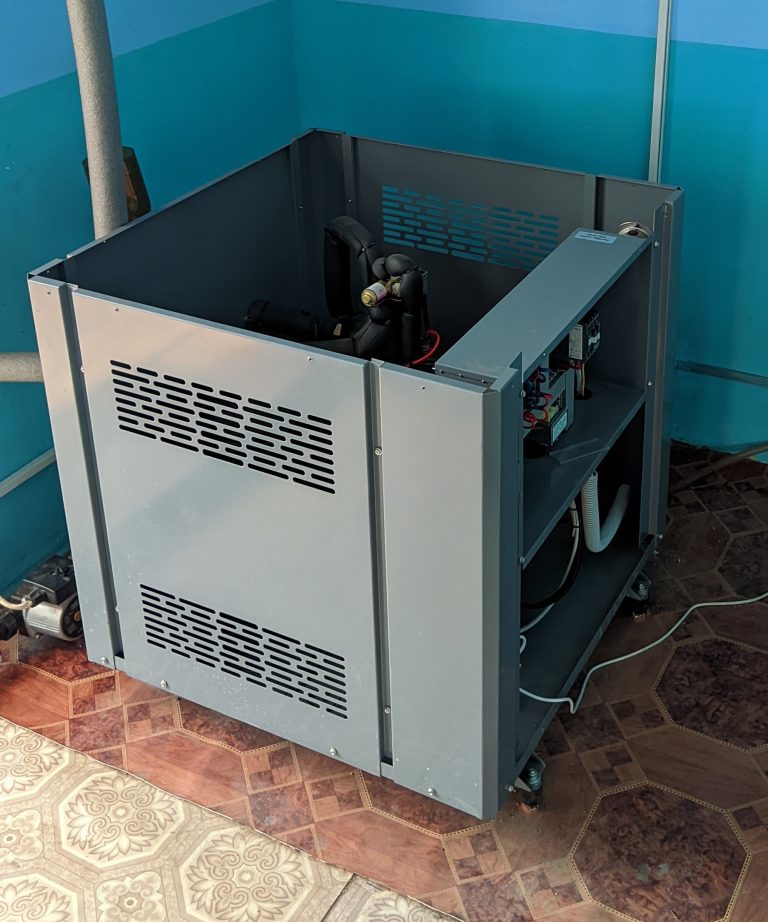
Modernization of the heating system in a private house, where before this heating was carried out by an electric boiler. The house is fully provided with electricity from solar panels, installed on the roof. The main goal – increasing the efficiency of the heating system and reducing electricity costs.
Answer
As part of the modernization, a heat pump was installed Raymer RAY-18DS1-EVI (380V), which is integrated into the existing heating system. The equipment is connected to the buffer capacity and the DIS tank to ensure the optimal distribution of heat in the system. This decision made it possible to significantly reduce energy consumption and increase comfort in the house in winter, using environmentally friendly energy from solar panels.
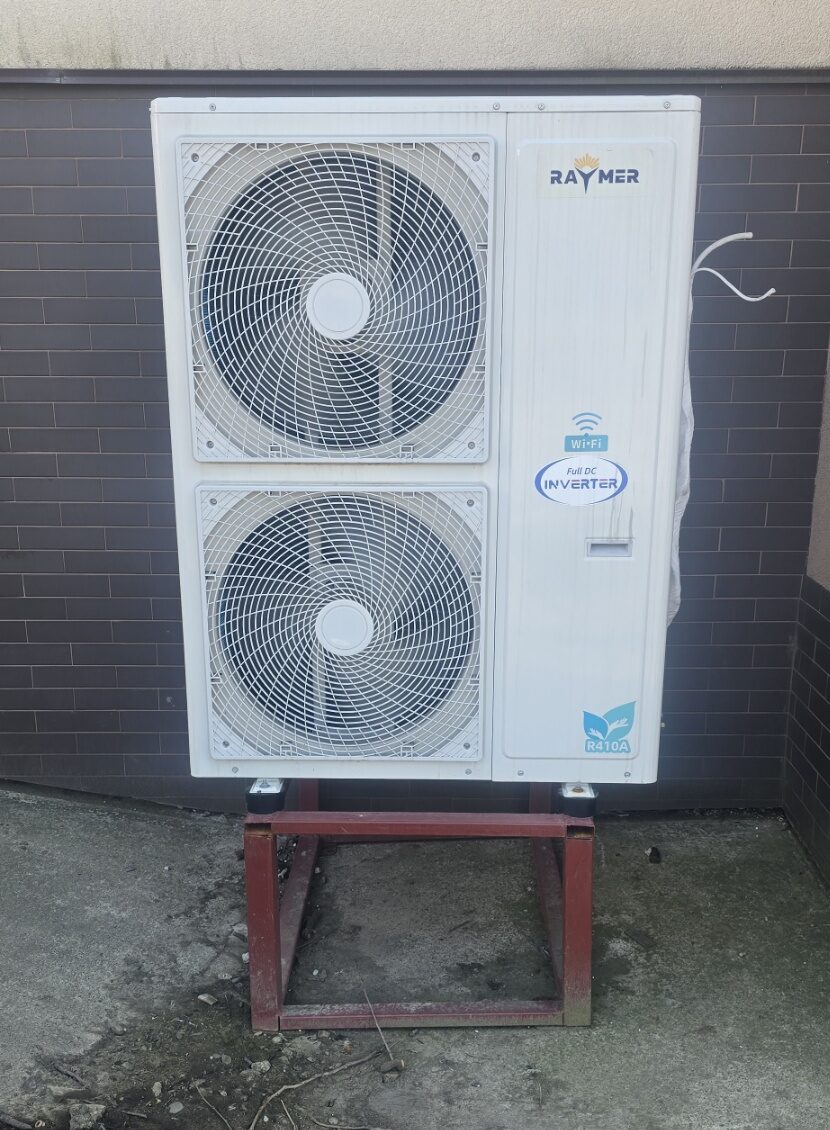 1. Installation of the external unit of the heat pump RAY-18DS1-EVI (380V)
The outer block of the heat pump Raymer Ray-18DS1-EVI (380V) was installed on a strong metal stand, which provides reliable fixation and stability of equipment. The metal structure has an anti -corrosion coating, which guarantees durability and resistance to external influences. Between the reference points, vibration -insulating pillows were installed, reducing the noise and vibration level during the operation of the pump.
During installation, special attention was paid to insulation of pipelines. All connections on the refrigerant highway are hermetically insulated with special material, which prevents heat loss. To increase resistance to external conditions, foil insulation was used, which also protects against ultraviolet radiation. Particular entry places into the wall are additionally treated with sealant to prevent moisture and heat losses.
2. Installation of the internal unit of the heat pump RAY-18DS1-EVI (380V)
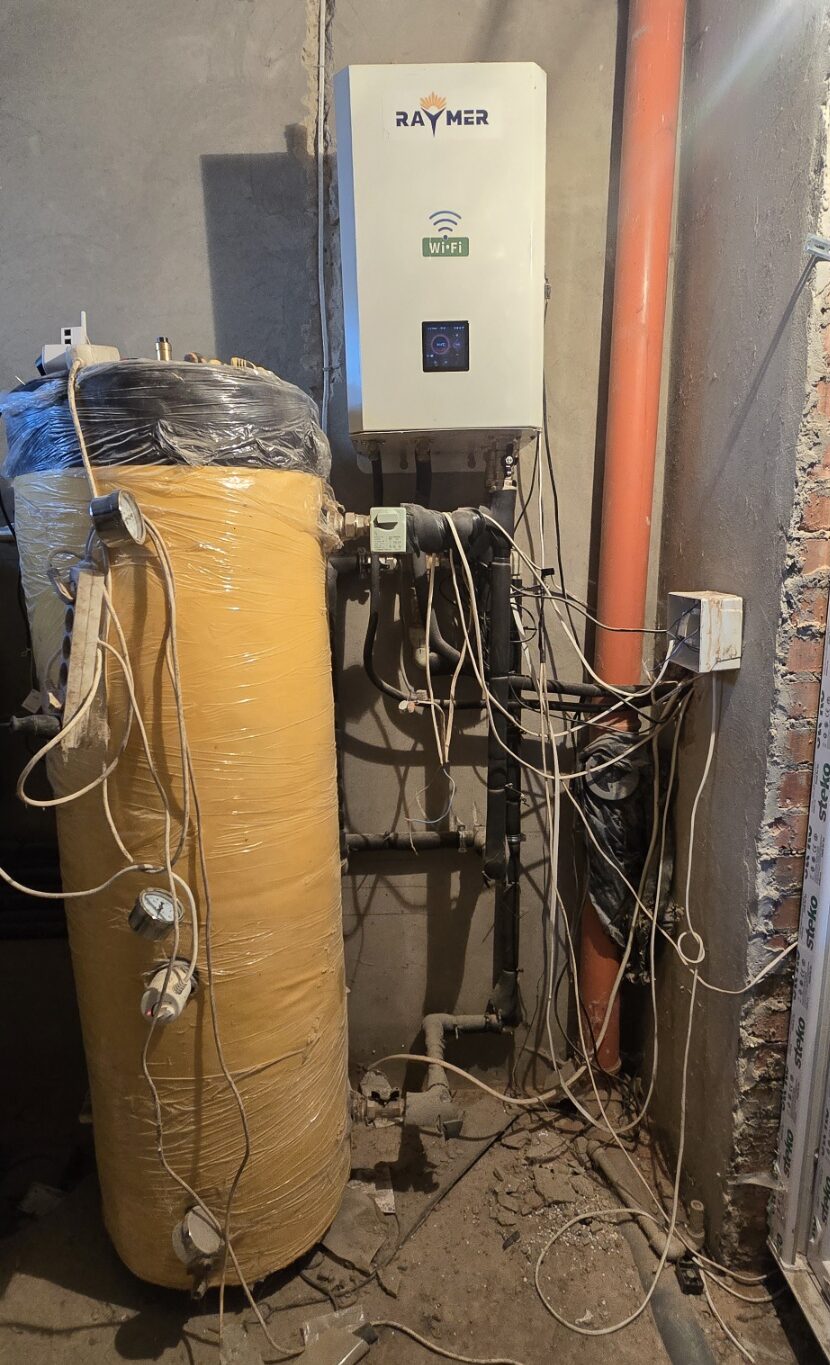
The hydraulic engine of the heat pump Raymer Ray-18DS1-EVI (380V) was installed in a technical room, which provides convenient access for maintenance and control of the system. Equipment is fixed on the wall on special brackets, which guarantees its reliable fixation and reduces vibration during operation.
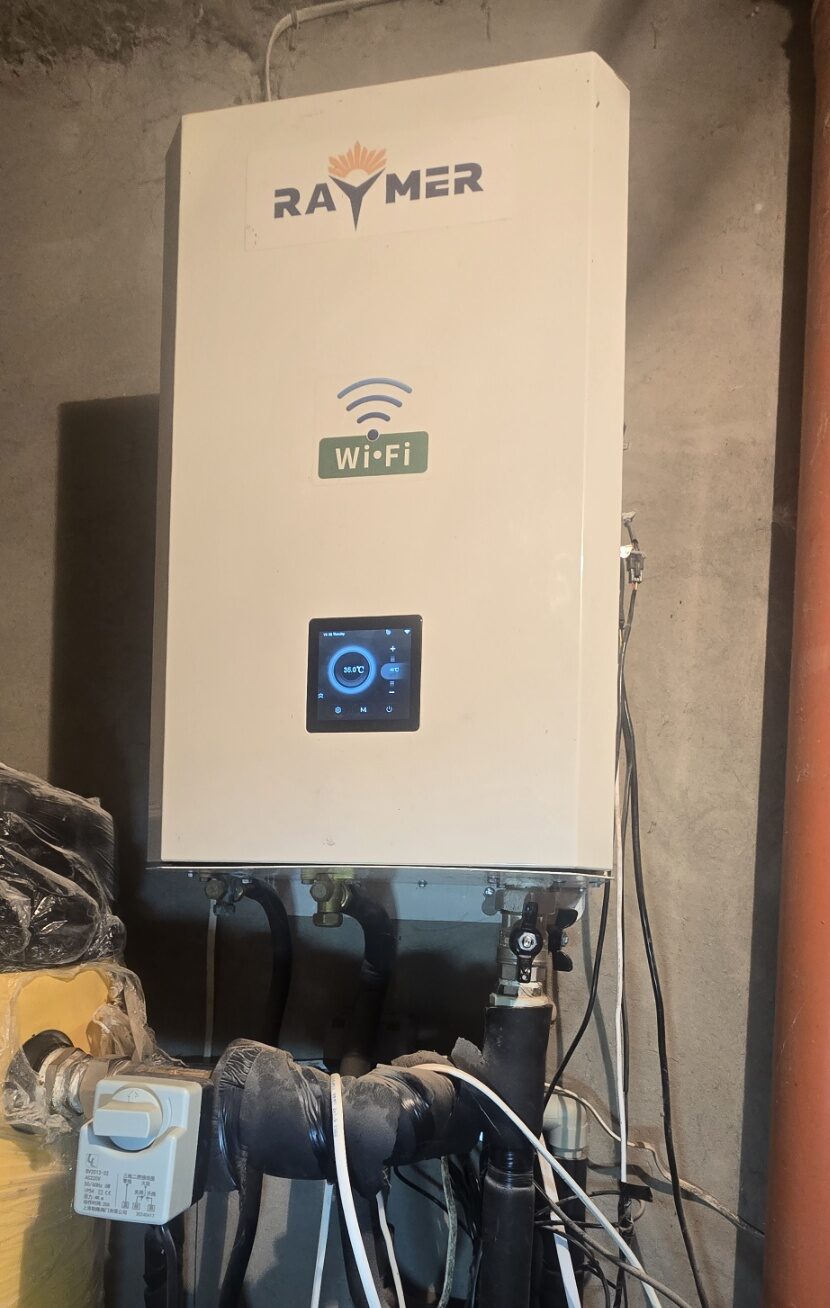 The connection of the hydraulic engine is made using reliable pipelines with preliminary insulation to minimize heat loss. All compounds are carefully sealed, which excludes the possibility of leaks and contributes to the stable operation of the system. To protect against freezing in the winter, insulation of the contours was used, which is enhanced by foil insulation.
The system also implements a connection to the tank-drive, which provides a constant supply of hot water and increases the efficiency of heating. For the correct distribution of water flows, circulation pumps and shut -off valves are installed, providing optimal pressure and uniform distribution of heat throughout the system.
Additionally, a control system with the possibility of remote monitoring and settings of parameters via Wi-Fi is connected, which allows you to control the operation of the heat pump even at a distance.
3. Connecting a buffer tank
Buffer capacity, which is integrated into the system with the heat pump Raymer Ray-18DS1-EVI (380V), was installed in a technical room next to the hydraulic engine. The capacity is connected to the main heating contour to ensure stable circulation of the coolant and compensation for thermal vibrations. This solution allows you to maintain an optimal temperature regime even with variable loads on the system.
Connection is made using reliable metal -plastic pipes, which were pre -insulated to reduce heat loss. All joints are sealed with special seals and reinforced with clamps to prevent leaks. The entrance and output of the buffer container are equipped with shut -off taps, which allows you to quickly disconnect it from the overall system if you need to maintain or repair.
Additionally, the system provides for the installation of thermometers and pressure gauges for monitoring temperature and pressure in the buffer capacity, which provides reliable work monitoring. This guarantees stable operation of the system, prolongs its resource and increases the overall efficiency of heating in the house.
4. Connection of the DIS tank
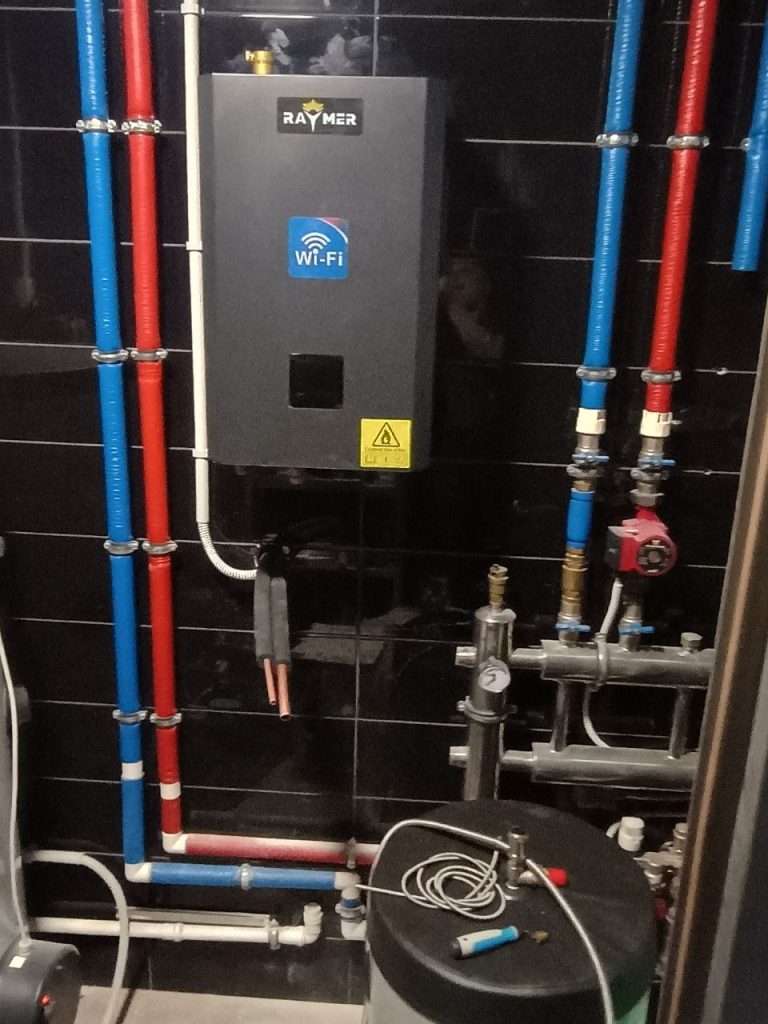
Hot water supply tank (DHW), which is visible in the photo, was integrated into the Raymer Ray-18DS1-EVI heat pump system (380V) To ensure stable hot water supply. The connection is made in compliance with all the necessary requirements for effective work and safety.
Connection:
Cold water entrance – connected in the lower part of the tank, provides cold water into the heat exchanger. A shut -off valve is installed on the pipeline, allowing the water supply during maintenance.
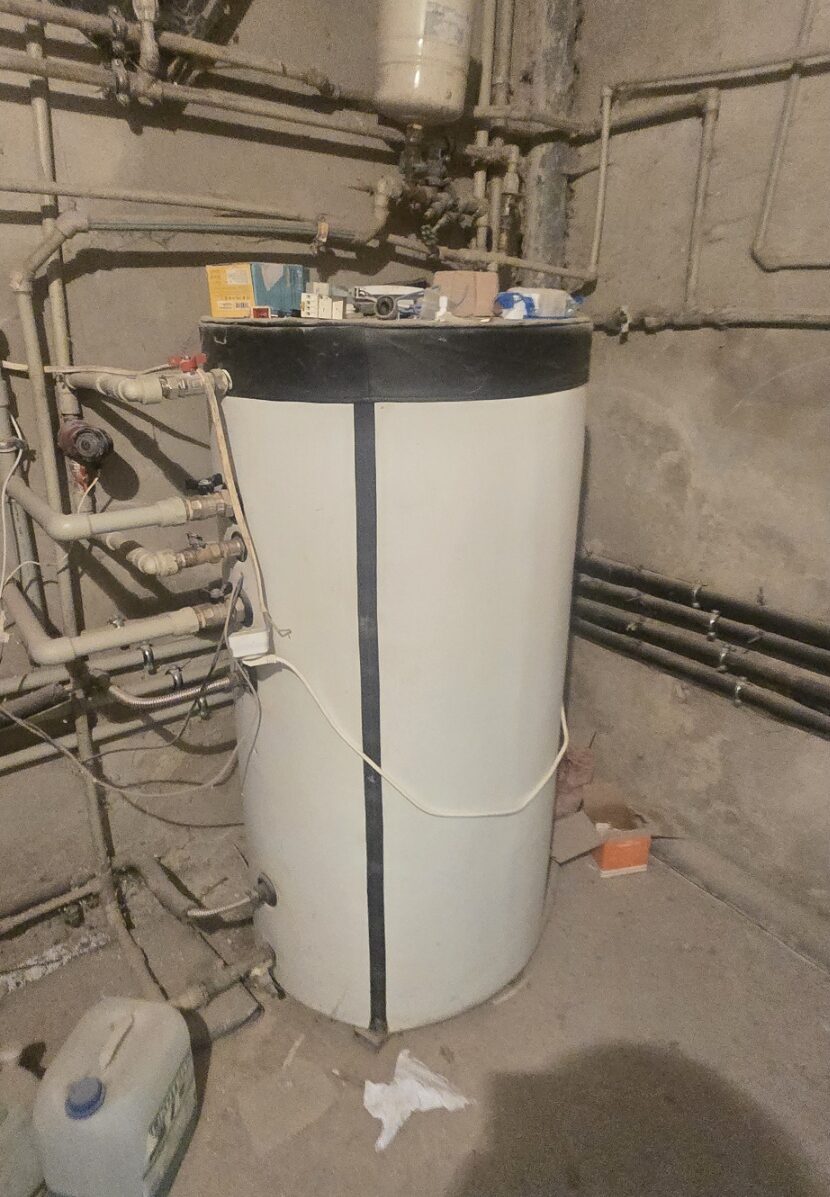
Hot water outlet – connected in the upper part of the tank to ensure the maximum temperature at the output. To prevent reverse current, a check valve is installed.
Recirculation – the possibility of connecting the recirculation circuit is provided, which allows maintaining a constant temperature in the system and the operational supply of hot water to consumers.
Magistral to the heat pump – The tank is connected to the contour of the heat pump, which heats the coolant, Providing water heating in the tank.
Security group – A safety valve is installed on the pipeline, Manometer and expansion tank, What can be seen in the photo. This allows you to control the pressure and ensures the safety of the system.
Thermal insulation – The tank has a layer of insulation, which reduces heat loss and increases the efficiency of the system.
Thus, Connection of the DHW tank allows the house to provide a house with stable hot water and increases the overall energy efficiency of the heating system.
The principle of operation of the entire system together
The outer block of thermal pump, open space, He takes heat from the surrounding air even at low temperatures and transmits it to the system using a circulation circuit. Coolant, heated in the outer block, enters the hydraulic engine, which is located in a technical room. In the hydraulic engine, the temperature controls and the distribution of heat between the heating contours and the buffer capacity.
The buffer container acts as a thermal battery, Smoothing the fluctuations in the operation of the pump and ensuring uniform supply of heat to the heating system. From the buffer container, the coolant circulates through radiators or a warm floor, Supporting a comfortable room in rooms.
In parallel with heating, Part of the heat is directed to heating water in the DHW tank. Cold water enters the tank, where it heats up using an internal heat exchanger, a heat pump connected to the system. Hot water is supplied to taps and showers, Providing constant use in use.
The entire system works synchronously, controlled by automation, which regulates the temperature depending on the needs of the user and external conditions. This provides maximum energy efficiency and stable work even in difficult climatic conditions.
Features of the heat pump Raymer RAY-18DS1-EVI
Energy Saving: The heat pump provides up to 80% saving energy by using heat from the environment, which reduces expenses compared to traditional heating methods.
Ecological cleanliness: The use of R410A freon makes the pump environmentally friendly, reducing CO2 emissions and helping to combat climate change.
Silent operation: The pump runs quietly, which allows it to be used in residential areas without discomfort. Built-in cooling function creates a comfortable microclimate in summer.
Inverter technology: The pump automatically adjusts power according to demand, providing stable heating and energy efficiency.
EVI technology: Increases pump efficiency in low temperature environments by injecting additional steam during compression, which improves performance in winter conditions.
Remote access via Wi-Fi: The ability to control the pump and monitor its operation via a smartphone or computer from anywhere with Internet access.
Reliability and durability: High quality materials and modern technologies ensure a long service life, which is confirmed by positive user reviews about stability and comfort.
Benefits for the client when replacing an electric boiler with a heat pump?
Customer, which replaces an electric boiler with a heat pump, receives several significant benefits:
Reduced energy costs: Heat pumps typically use less electricity to produce the same amount of heat, which can lead to significant reductions in heating costs.
Environmental friendliness: Using a heat pump reduces CO2 emissions, because it draws energy from the environment, making it a more environmentally friendly solution.
Versatility: Thermal pumps can not only heat the rooms, but also provide cooling in summer and hot water supply, making them a universal solution for comfort throughout the year.
Improved comfort: Heat pump systems provide more stable temperatures and better control, which increases the overall comfort in the home.
Less maintenance: Heat pumps generally require less maintenance than electric boilers, which reduces maintenance costs.
Durability: Heat pumps have a longer service life compared to electric boilers, which reduces the need to replace equipment.
All in all, Replacing an electric boiler with a heat pump significantly increased energy efficiency, Reduce expenses, improve comfort and have a positive impact on ecology.