 The initial situation
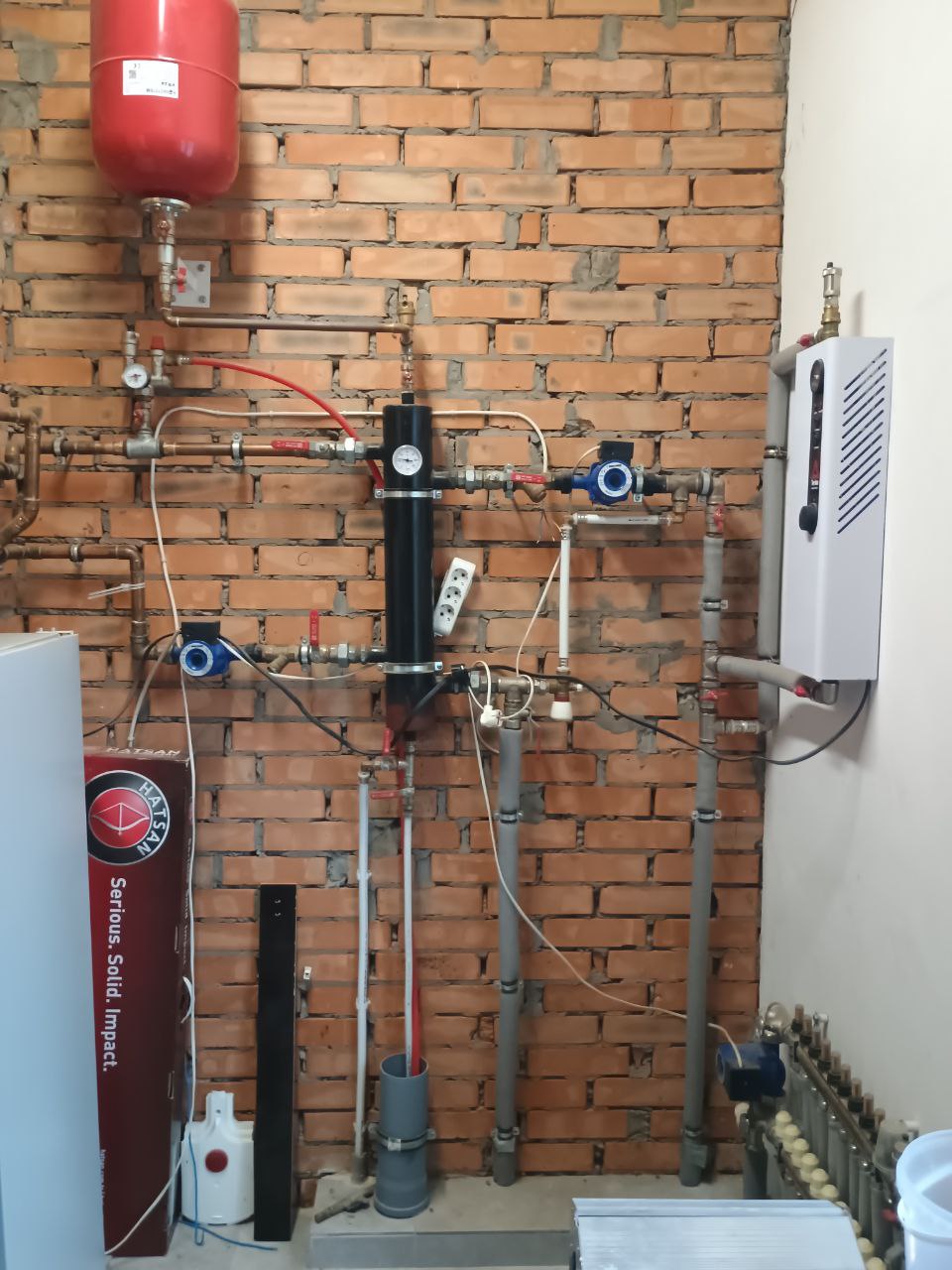
In this house, the heating system was originally implemented on the basis of an electric boiler. The photo can be seen, What the system looks like: The electric boiler is installed on the right, On the right side, the supply unit with the collector for the warm floor or radiator heating is also visible on the right side. The system was collected competently: An expansion tank has been installed, Hydraulic distributor, circulation pumps, Safety group and automation.
However, Despite the correct work, The main problem remained - high electricity consumption. Maintaining a comfortable temperature in the cold period led to significant expenses for electric heating. This has become the main motive for the transition to a more economical solution.
The task
The client turned to reduce heating costs, Preserving the existing pipeline system, collectors and automation. It was important to integrate a new heat source without complete dismantling the boiler room, with minimal intervention in already established hydraulics. The client also wanted to get the opportunity to bathe without loss of comfort.
Solution-Thermal pump Raymer Ray-10DS2-EVI
В рамках проекта был выбран тепловой насос Raymer RAY-10DS2-EVI (10 kW). This is an energy -efficient model with an inverter compressor, which can work before -25 ° C and is able to completely replace electric boots in the conditions of Ukrainian climate.
Preparatory stage of installation
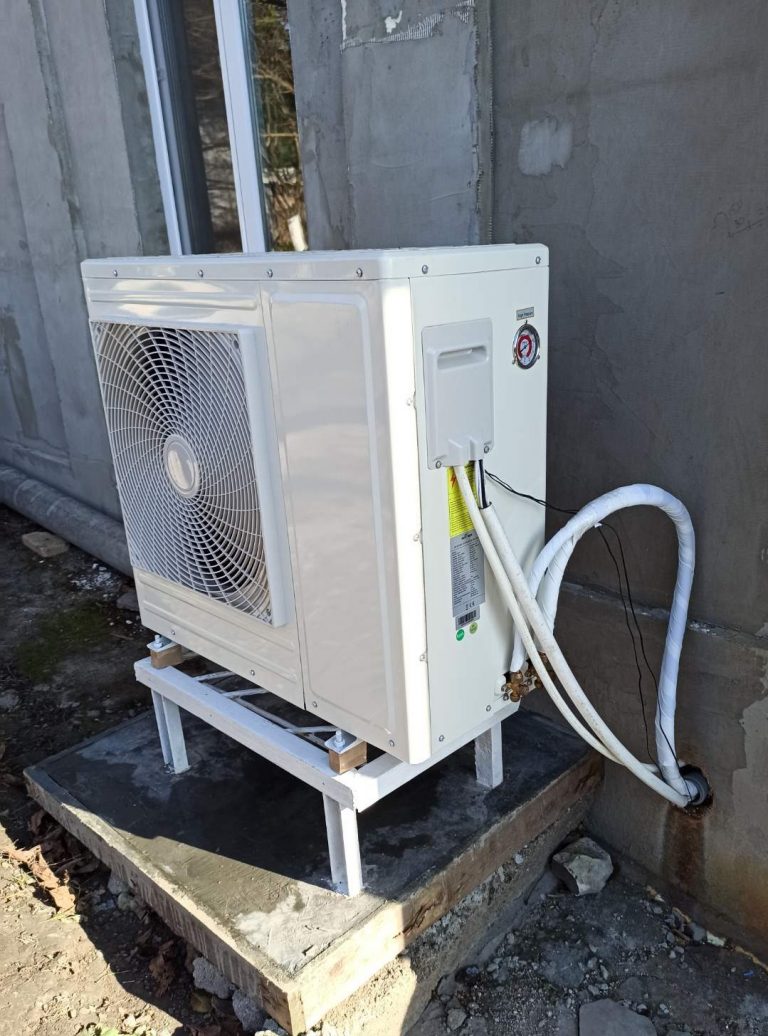
Before installing the Raymer Ray-10DS2-EVI heat pump, the necessary preparatory work was carried out. Одним из ключевых этапов стало The removal of freon highways through the wall from the boiler room to the place of installation of the external unit. This made it possible to correctly organize the connection between the internal and external blocks of the heat pump without significant intervention in the interior of the room.
Для надежной установки внешнего блока была Metal support is mounted, placed on a concrete basis with anti -vibration gaskets. The design provides a stable aggregate fastening, Snow drift protection and convenient access for maintenance. Besides, The block is placed at the optimal distance from the wall, which guarantees sufficient ventilation and efficient operation even at minus temperatures.
The preparation of this stage was carried out taking into account all the technical requirements of the manufacturer, which allowed the main installation of the system without delays and complications.
1. Installation of the external block Raymer Ray-10DS2-EVI
At the next stage, the external block of the heat pump Raymer Ray-10DS2-EVI was mounted. At first the unit was installed on a standard low metal stand, which ensured stability and compliance with the requirements for the minimum height above the ground. This option was technically acceptable, However, after assessing the appearance of the facade of the house, it was decided to raise the block to another level.
This made it possible to achieve better aesthetic integration of the external bloc into the architecture of the house, and also create an additional height supply in case of heavy snowfalls. The new stand provided not only visual harmony with the facade, but also the best air circulation around the heat exchanger, which positively affects the effectiveness of the system in the winter period.
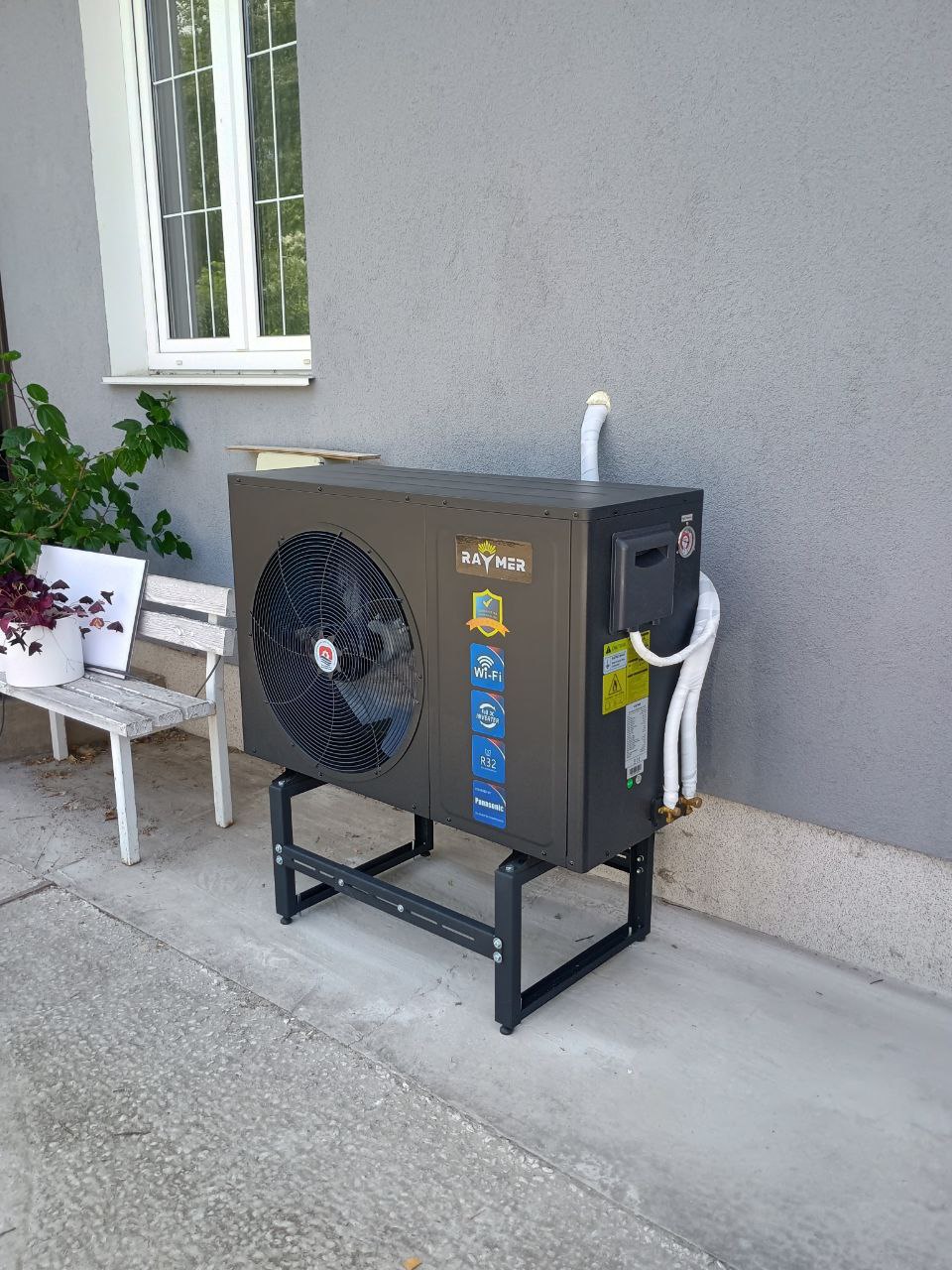
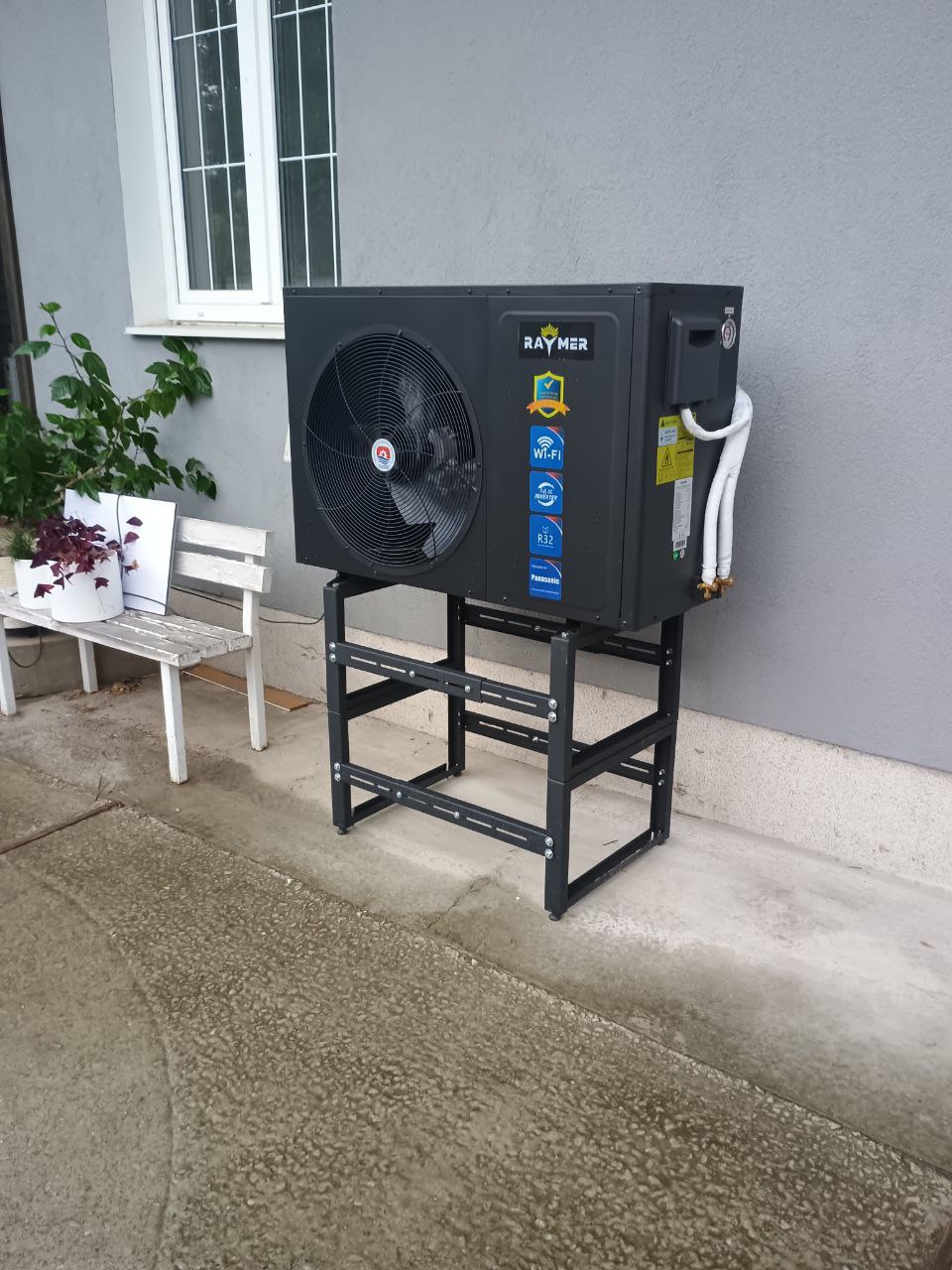 Installation of the external unit of the heat pump Raymer Ray-10DS2-EVI was carried out taking into account a number of important technical and practical factors. The main requirement for installation was to provide sufficient ventilation around the unit, So that the air freely enters the heat exchanger and just as freely exits after passing through it. This is critical for stable operation of the pump at low temperatures.
The external unit was connected through the freon highways, which were preliminary withdrawn through the wall at the preparatory stage. For this, heat -insulated copper pipes were used, Toif sealed into the room and securely recorded. The power supply is brought taking into account the requirements for voltage stability and protection against overload.
A drainage system for removing condensate is also installed, which is displayed below the installation level and is protected from freezing. In the future, it is possible to connect the pallet heating or installation of protection for effective work in conditions of harsh winter.
Generally, The installation of an external unit is carried out in compliance with all safety standards, ergonomics and energy efficiency, which guarantees prolonged and stable operation of the entire system.
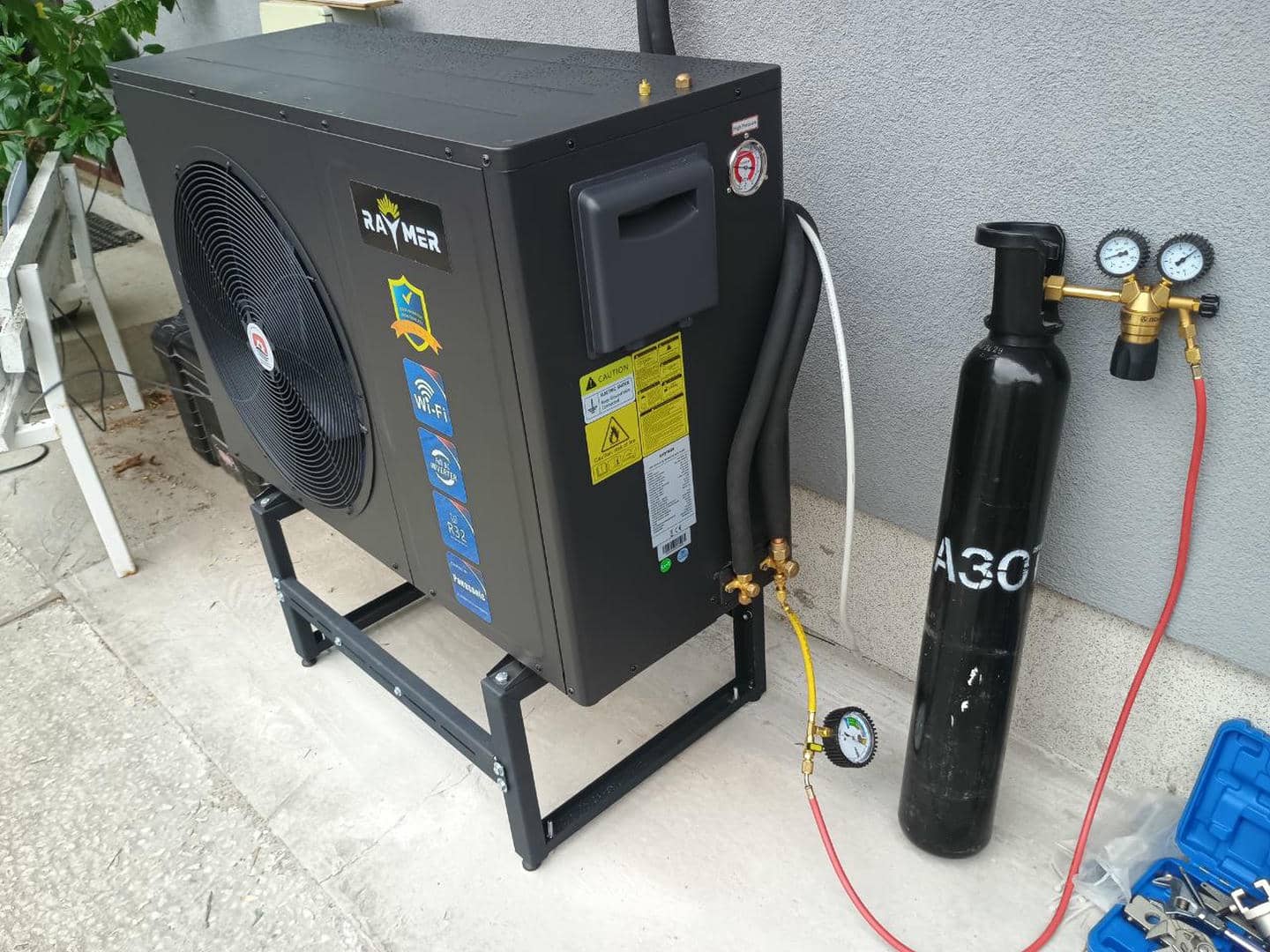 2. Vacuuming the system with nitrogen
В процессе монтажа теплового насоса Raymer RAY-10DS2-EVI важной частью подключения внешнего блока стало Vacuuming of the freon highway, which was fulfilled in accordance with all technical standards. Но перед непосредственным вакуумированием an additional extension purge procedure was applied.
This step is extremely important: nitrogen displaces moisture and impurities from the inner surface of the freon pipes, which can get there during the laying or storage of materials. Moisture or dust in the system can negatively affect the compressor work, cause a crystallization of a refrigerant or even damage to the system.
Purge was performed by technical nitrogen under pressure, после чего система была вакуумирована вакуумным насосом до глубокого вакуума. This made it possible to completely remove the remaining air, moisture and impurities from the system before refueling freon, providing ideal conditions for further hermetic operation of equipment.
Thanks to this approach, it was possible to achieve maximum efficiency of the heat pump and guarantee its durable, stable work without violation of thermodynamic processes in the system.
3. Installation of the internal block Raymer Ray-10DS2-EVI
Внутренний блок теплового насоса Raymer RAY-10DS2-EVI was installed directly in the boiler room, Near the electric boiler и распределительными коллекторами системы отопления. Its installation was carried out in this way, to provide convenient access for service, visual control and connection of all necessary communications.
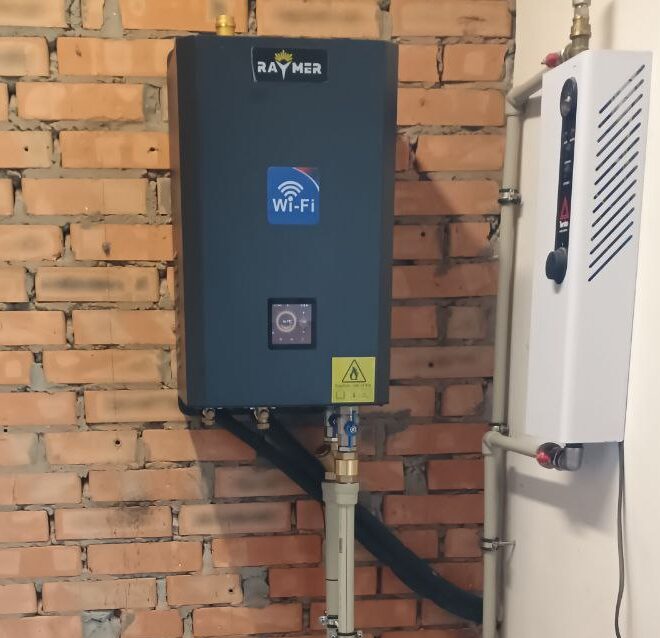 The unit installation is made on a strong vertical wall, при этом были соблюдены все нормативные требования по вентиляции вокруг корпуса. A freon line is connected to the hydraulic engine, which passes through the wall and is connected to the external unit. The junction of the joint is carefully sealing, And the tracks are insulated to prevent heat loss and condensate formation.
From the side of hydraulics, the internal block is connected to the buffer capacity, which is located directly under it. For convenience and efficiency in the strapping, ball valves were used, drainage, Safety group and circulation pumps. Power supply of a hydraulic engine is made in compliance with grounding and protection requirements - for this a separate socket with a machine gun was used, as well as a voltage stabilization system.
Thus, The internal block Raymer has become a key element of the new heating system, which not only works efficiently, but also has aesthetic, thoughtful appearance with a clear organization of all connections.
4. Connection of Aquaviva buffer capacity volume 80 liters
In this project, a buffer capacity of Aquaviva volumes was installed 80 liters. Installation of the tank is made directly under the internal unit of the heat pump Raymer Ray-10DS2-EVI, which made it possible to minimize the length of hydraulic compounds and reduce heat loss. The tank is installed on a flat concrete base, which ensures its stable position and safe operation.
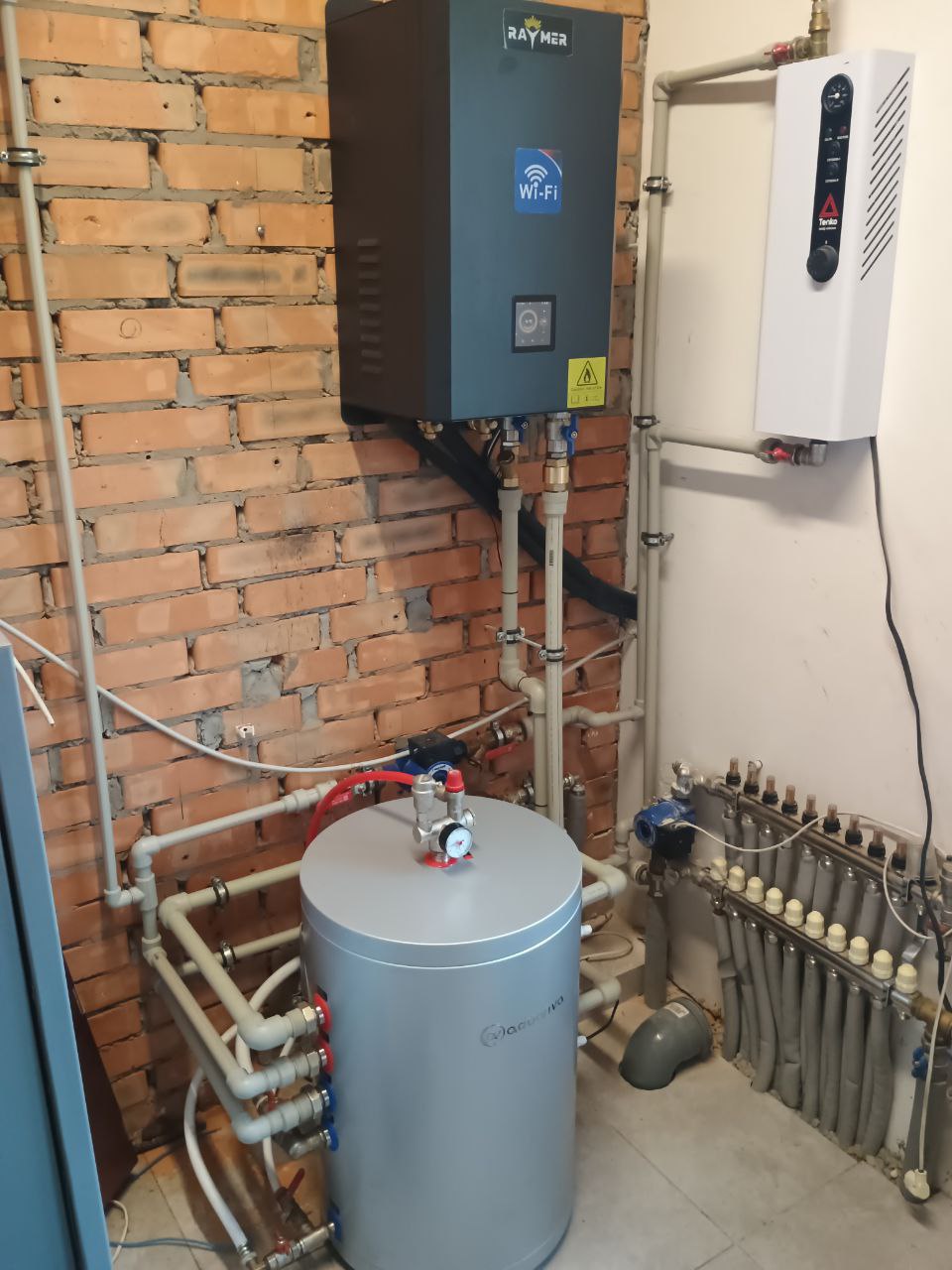 Connection of the buffer capacity is made through the upper and side pipes, Depending on the direction of the flow and distribution of the coolant. One circuit is connected to the heat pump hydraulic pump, which serves heated coolant to the upper part of the tank. The reverse flow is taken from the lower part of the container, providing a constant temperature and stable operation of the system.
Separately, the connection to the comb of the warm floor system was implemented. The selection of the coolant to the warm floor is carried out through a separate circulation line, подключенную к одному из боковых патрубков буфера. In this case, a circulation pump is included in the system, providing the necessary pressure and power for pumping the coolant through the hinges of the warm floor. The distributor has separate contours with the possibility of individual temperature adjustment in each room.
This solution allows the buffer capacity to work as a hydraulic separator between the contour of the heat pump and the low -temperature system of the warm floor. This ensures uninterrupted operation of the entire system, The stable temperature in the premises and prevents excessive inclusion of the compressor with frequent heat requests from the floor.