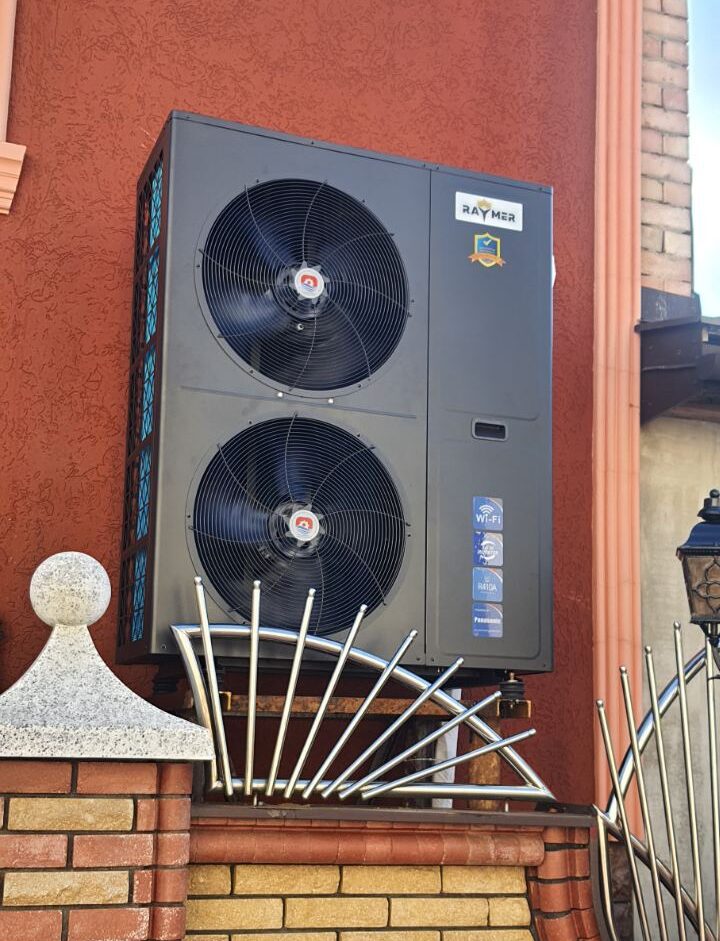
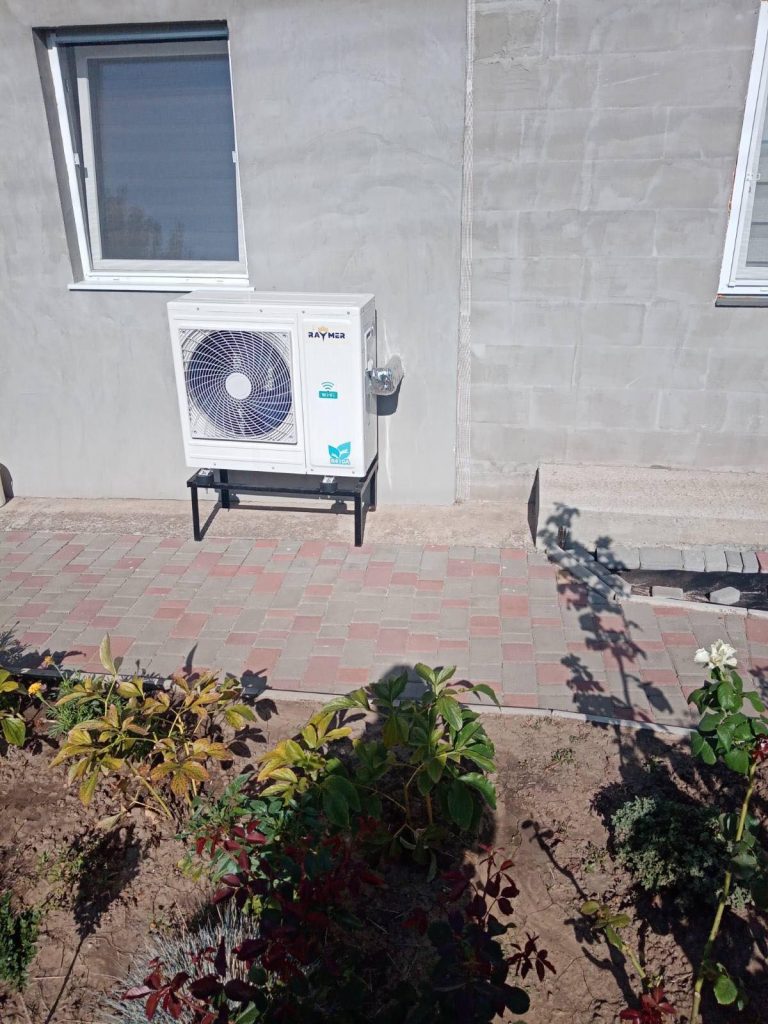
Task and solution of the problem
Task:
The customer contacted our company in order to reduce heating and hot water costs. Due to the rapid rise in prices for traditional energy sources, the client started looking for a solution, which would help optimize costs and guarantee stable heat supply.
The task was, to install a heating system, which could work regardless of external factors. As a result of an analysis of the client’s capabilities and the ergonomics of the house, it was decided to install a geothermal heat pump Raymer RAY-15WW, which in 4-5 times more efficient than an electric boiler, which until now has been the main source of heating in the house.
Answer:
Installation of geothermal heat pump Raymer RAY-15WW (380AT) made it possible to ensure efficient use of earth's energy to heat the house. This type of heat pump can significantly reduce heating costs by using stable ground temperatures, which does not change throughout the year.
Compared to an electric boiler, which was already installed before, a ground source heat pump has a significantly higher efficiency factor (Efficiency) and produces at medium power 12 kW of thermal energy consumed 3,4 kW.
Installation of the pump involved drilling a well and immersing the heat exchanger to a depth calculated by experts, which ensures optimal pump efficiency.
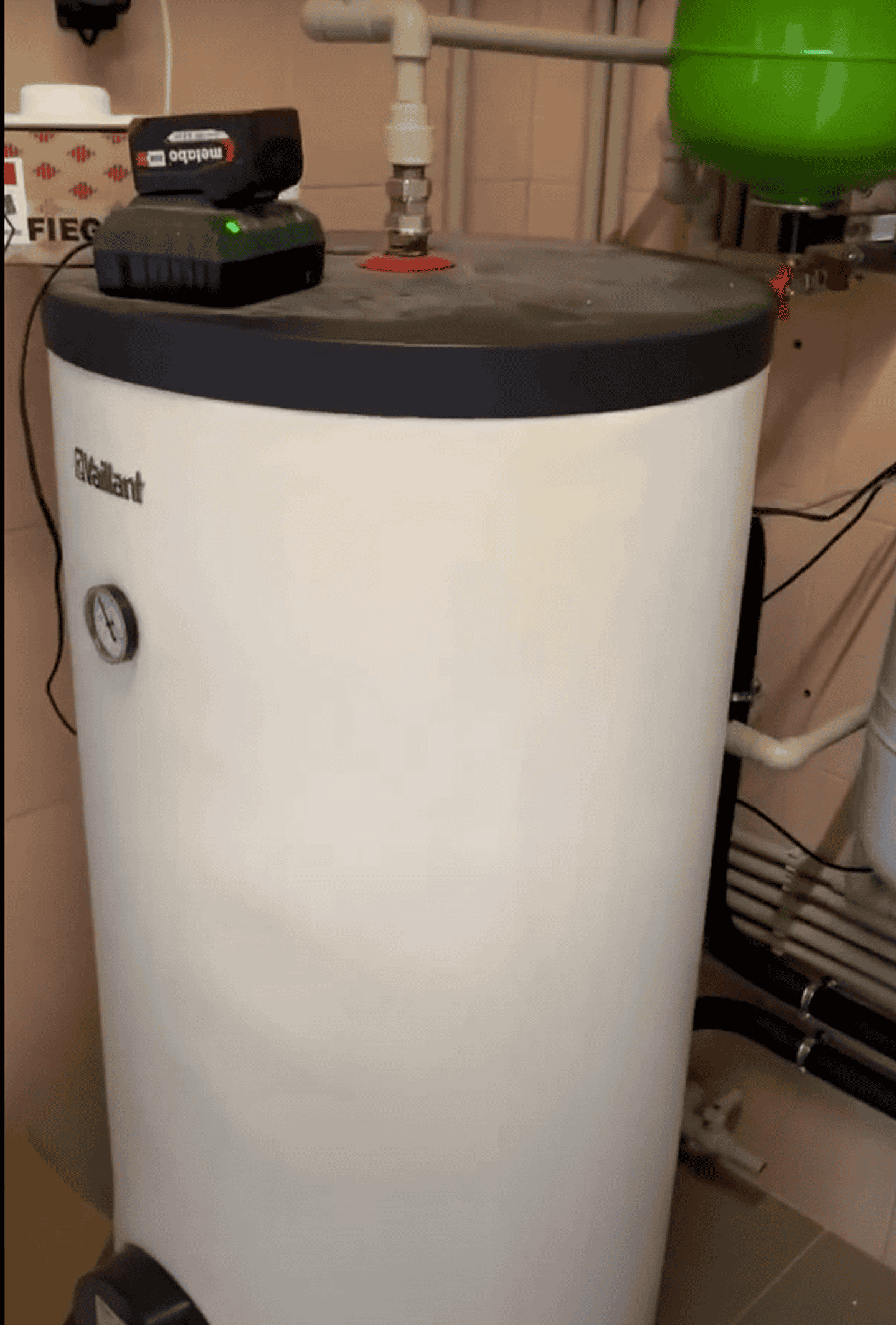
Besides, a DHW system was integrated with a Vaillant indirect heating tank on 200 l, allows you to provide the house with hot water, as well as a storage tank of the same brand on 100 l, for accumulation of coolant in the system.
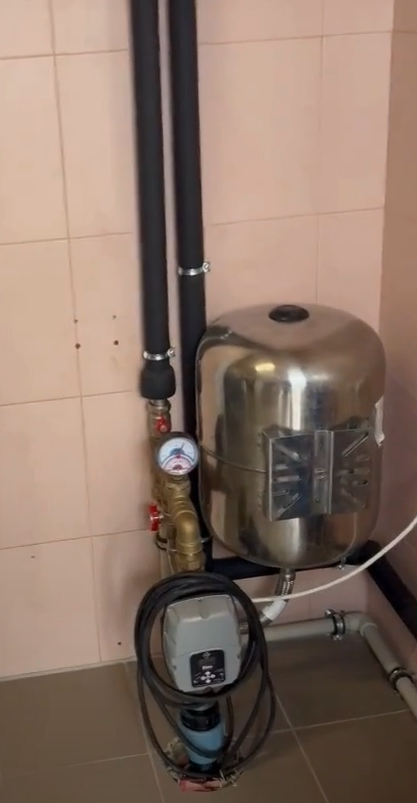
Scope of work completed
During the work, several key stages were implemented, each of which required high precision and professionalism. All work was carried out taking into account safety requirements and using modern equipment.
1. Analysis of the existing heating system
Before starting work, a detailed analysis of the existing heating system and construction infrastructure was carried out. It was important to take into account all the nuances of the building, including its thermal insulation, the presence of an internal heat transfer system and pipelines, as well as access to the well drilling site. This made it possible to develop an optimal scheme for integrating a geothermal heat pump into an existing system.
2. Well drilling
The main difficulty of the entire geothermal pump installation phase was ensuring sufficient well depth and distance between the two cores (cold and hot serve), which should be at least 15 m for efficient operation of the heat pump.
Calculation of the depth and drilling of the well was determined by the need to access a stable layer of earth with a constant temperature. The work was carried out using special drilling equipment, which ensured accurate and safe drilling.
3. Installation of the block
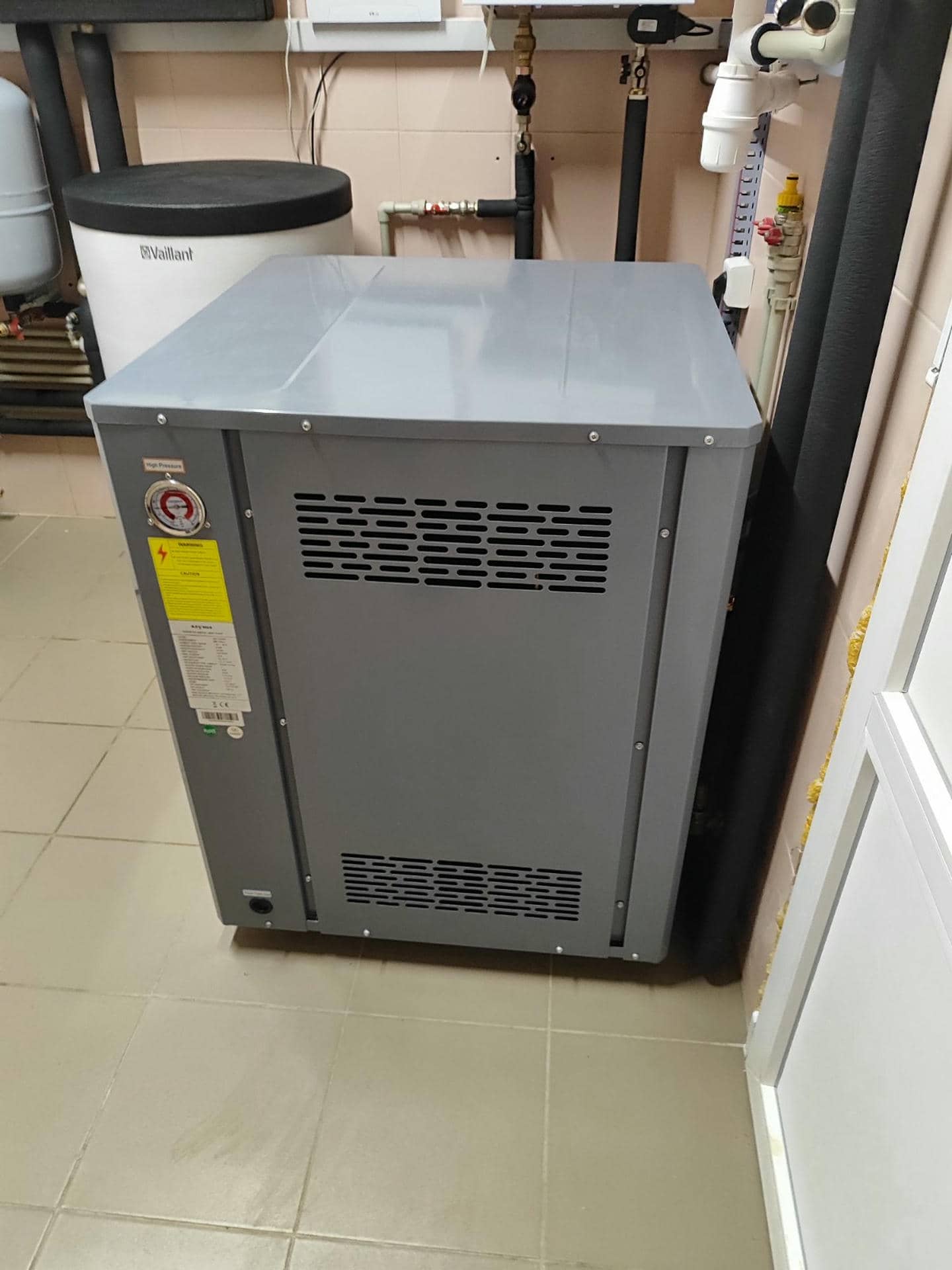
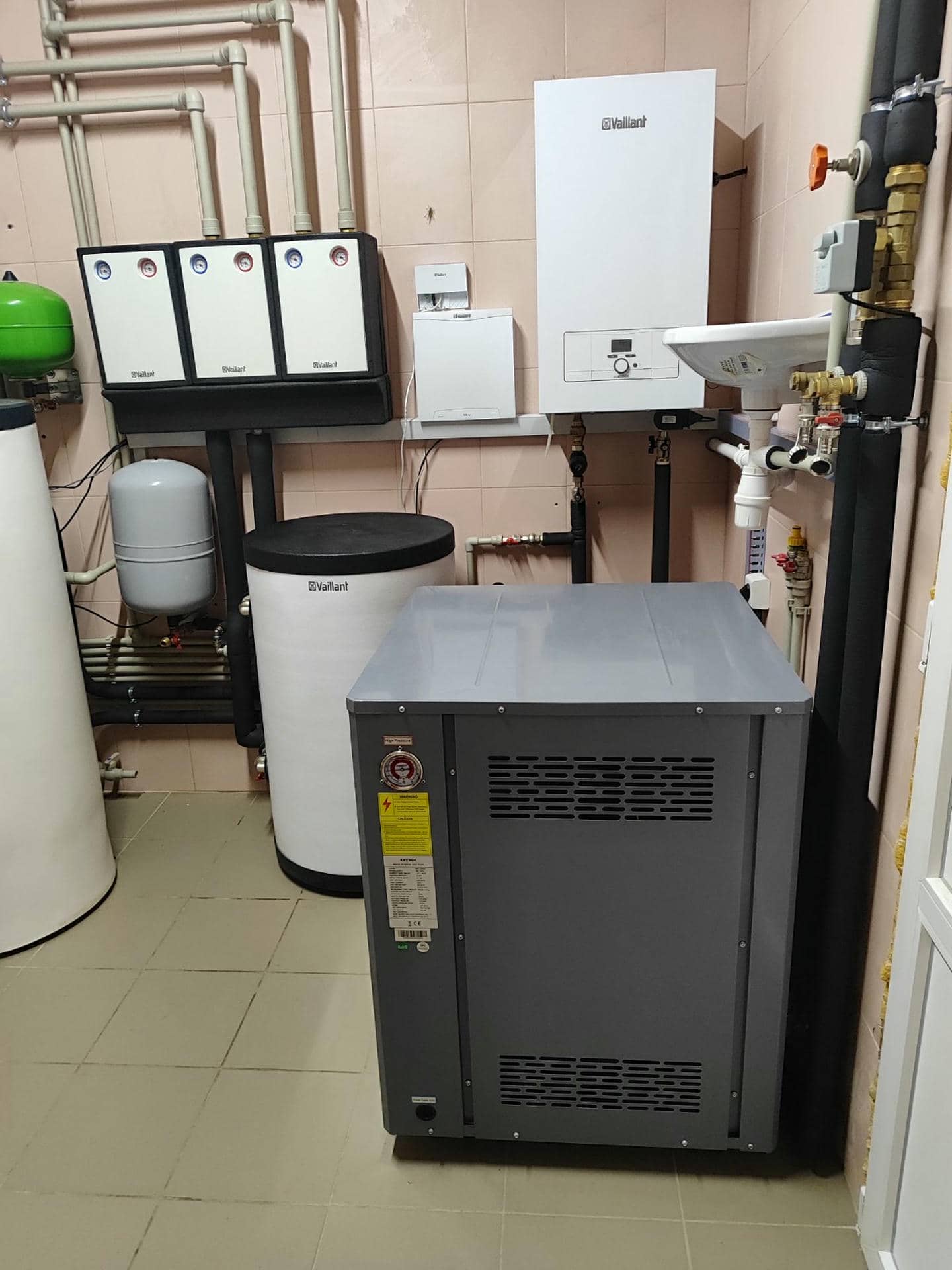
The heat pump unit was installed in a dry and ventilated room - the boiler room - at an optimal distance to all system components, which simplifies maintenance and allows free access to connections, valves and pump.
It should be noted, that this heat pump is already equipped with high-quality shell-and-tube heat exchangers on the evaporator line, which are very resistant to dirt and do not require additional maintenance.
3. Connecting the indirect heating tank and storage tank
To ensure hot water supply and accumulation of coolant in the system, Vaillant TM tanks were selected for 200 and 100 liters respectively.
Thanks to its large volume, the indirect heating tank allows water to be used for several points of consumption simultaneously without loss of temperature.
The storage tank helps maintain a constant coolant temperature, optimizing the operation of the heat pump and reducing the load on the system during peak loads. The tank allows you to accumulate heat and use it as needed, reducing the number of heat pump starts, which increases energy efficiency, and also helps to avoid temperature changes and stabilizes the operation of the heating system, reducing the load on the pump.
Thus, the use of TM Vaillant tanks allows you to achieve maximum comfort and efficiency of the heating and hot water supply system.
Additional system components
1. Installation of a deep-well pump with automation
Deep well pump is an important component of the geothermal heat pump system, since it circulates the coolant between the underground heat source (geothermal probe or borehole) and the heat pump itself.
The pump is responsible for the continuous circulation of coolant in the system, allowing the heat pump to efficiently transfer heat from underground sources to the home's heating or cooling system. The deep pump maintains the required pressure in the system, what is important for stable and efficient operation of a geothermal pump.
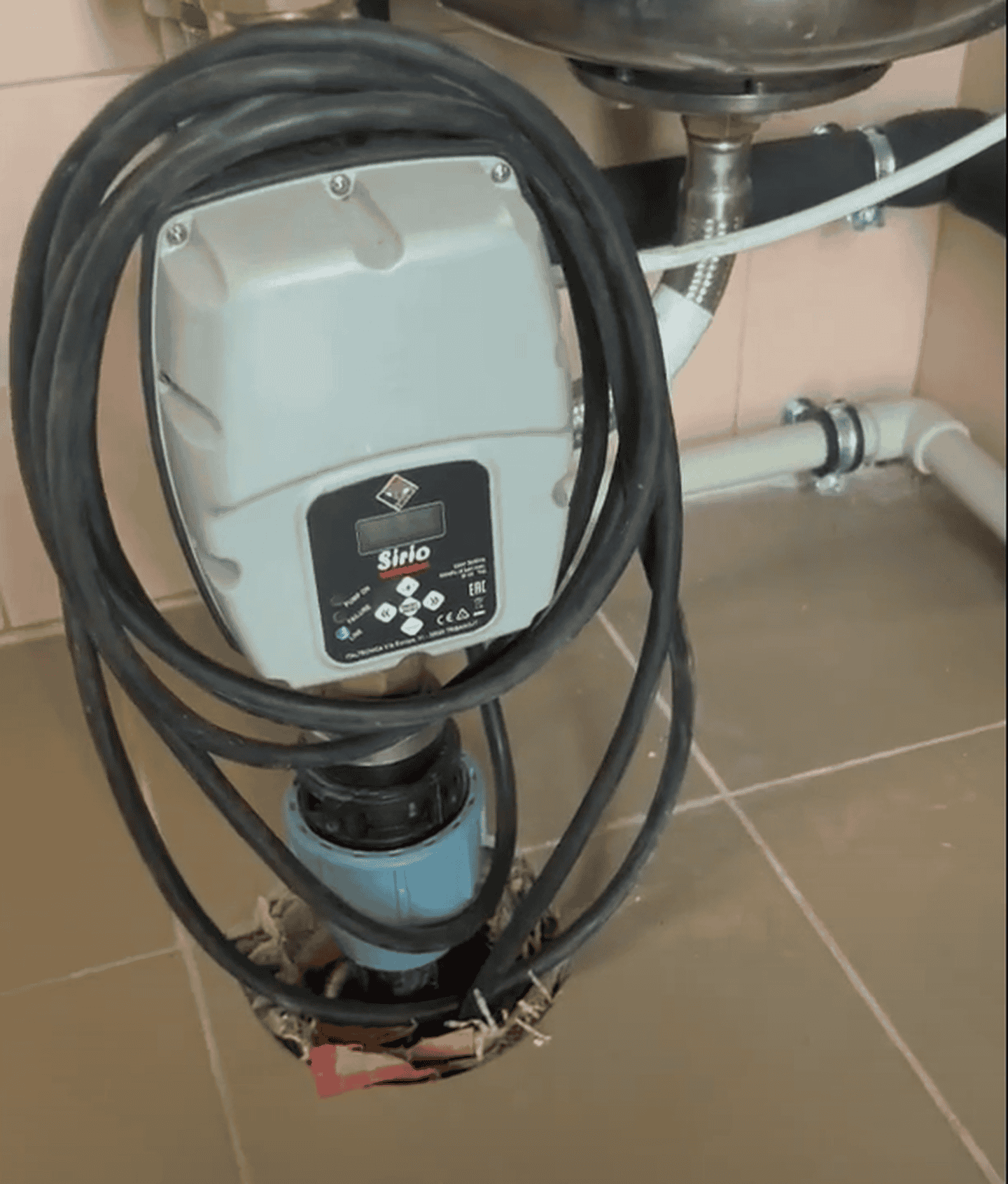 Additionally installed Sirio automation for deep-well pumps - This is a control system, providing automatic control and optimization of the operation of deep-well pumps. It is designed to increase pump efficiency, reducing energy consumption and extending their service life.
Sirio supports variable pump motor speed, which allows you to automatically adjust the pump speed depending on the needs of the system. This ensures efficient energy consumption, reduces energy consumption and reduces the load on the pump.
Also prevents sudden pressure surges in the system thanks to the smooth start and stop of the pump. This reduces mechanical stress on the pump and piping system.
This system is equipped with dry-running protection functions, engine overheating, overvoltage and other emergencies, which ensures long-term uninterrupted operation of the pump.
By optimizing pump operation and speed control, The system helps to significantly reduce energy consumption, which is especially important with geothermal heat pumps.
2. Installation of a two-way valve with electric drive
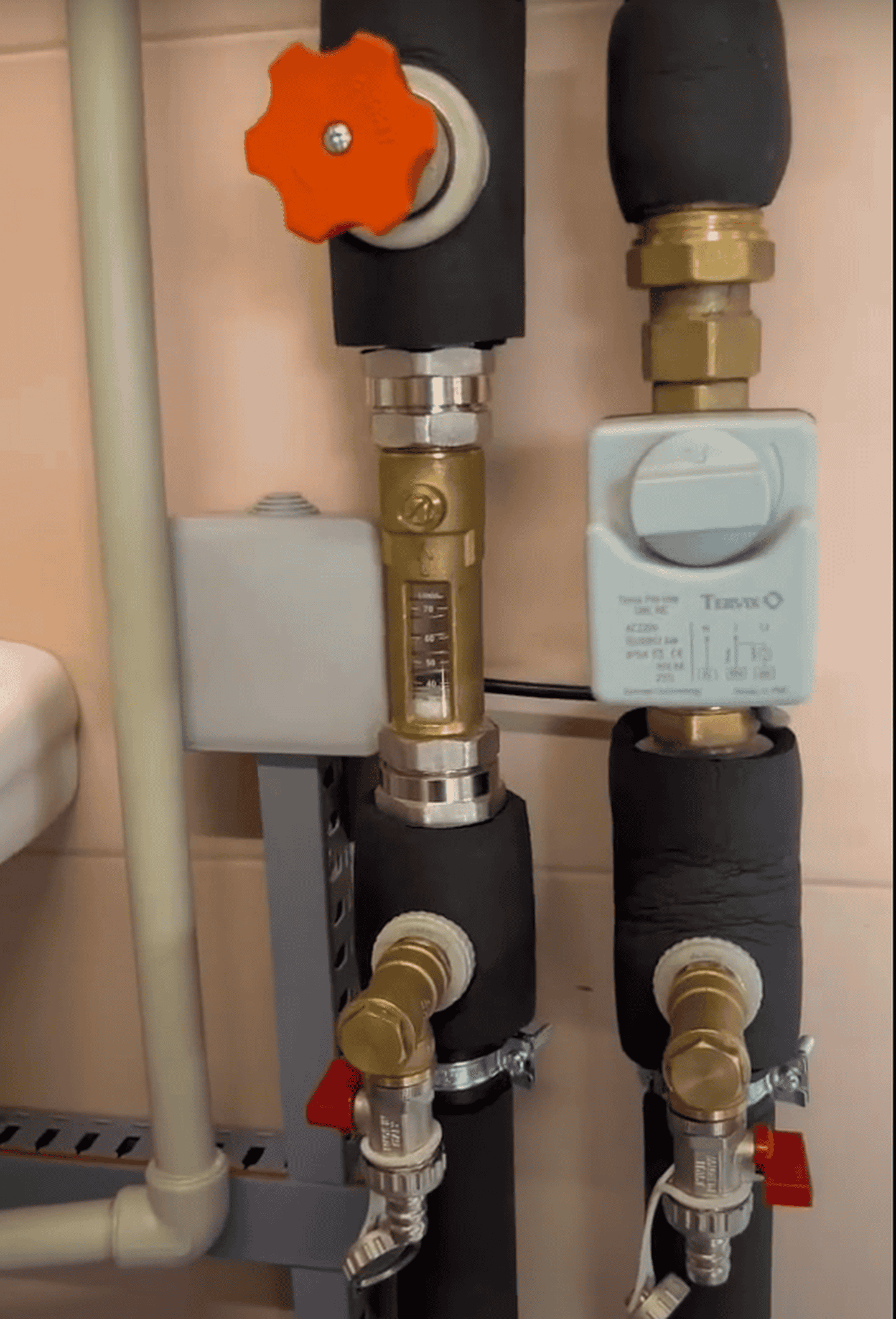
In this system, a two-way valve with an electric drive was installed at the coolant inlet to the system, which is for automatic fluid flow control. Thanks to the electric drive, the valve changes its state (open or closed) in accordance with signals from the control system.
Outlet water flow meter, calibrating the required amount of water for the system. Normal water flow for this heat pump 2-3,5 m³/hour.
3. Three way valve and circulation pump
In a geothermal heat pump system, the three-way valve and circulation pump perform important functions for efficient heating and air conditioning operation..

Three-way valve used to redirect the flow of the coolant between different circuits depending on the needs of the system. The valve switches the coolant between the heating circuit, DHW circuit (hot water supply) or cooling circuits.
Using a controller, the three-way valve automatically changes flow direction depending on temperature settings, which allows you to use one system for different needs, increasing energy efficiency.

Circulation pump provides constant movement of the coolant in the system, constantly pumping coolant between the heat pump and the heating or cooling system. Thanks to constant circulation, the coolant is evenly distributed throughout the system, which prevents overheating or cooling of individual zones.
Proper operation of the circulation pump ensures maximum system efficiency, reducing energy consumption.
Three way valve and circulation pump together allow the geothermal heat pump Raymer Ray-15WW to work as efficiently as possible, providing comfortable conditions in the house both for heating, cooling, and for hot water supply.
4. Connecting a voltage stabilizer
 To ensure safe and reliable operation of the heat pump, a voltage stabilizer was installed. This device protects the system from voltage surges and other possible power supply problems..
In case of possible blackouts during certain periods of the year, a voltage stabilizer is required in heating systems, powered by a generator or batteries to ensure long-term operation of the heat pump and protection against breakdowns.
5. Installing a controller to monitor system performance

Installing a controller to monitor heating system performance is an important step, allowing to optimize its operation and provide comfortable conditions. The controller provides:
Temperature monitoring: Measures indoor and outdoor temperatures, which allows you to regulate the heating.
Mode management: Allows you to configure different operating modes of the system, such as automatic, energy saving or comfortable.
Data visualization: Shows system metrics on screen, which makes them easy to understand.
Performance Analysis: Collects energy consumption data, which helps identify opportunities to improve efficiency.
Problem Alert: Automatically informs about any problems in the system, which allows timely action to be taken.
Thus, installing a controller not only increases the efficiency of the heating system, but also ensures its reliability and ease of use.
Features and characteristics of soil (geothermal) heat pump Raymer RAY-15WW (380AT)
The Raymer RAY-15WW ground source heat pump is a modern solution for heating private homes. The main technical characteristics of this pump allow it to operate with high efficiency at low operating costs.
Power and efficiency:
Thermal power of Raymer RAY-15WW is 15 kW, which provides efficient heating of houses up to 160 sq.m. Thanks to inverter technology, the pump automatically adjusts its power depending on the heat demand, which allows to significantly reduce energy consumption.
Environmental friendliness:
Raymer RAY-15WW uses earth energy, what is a renewable source. This significantly reduces CO2 emissions compared to traditional gas or electric boilers, making it an environmentally friendly heating solution.
Reliability and durability:
Raymer RAY-15WW heat pump is made of high quality materials, ensuring long-term operation. The pump housing is resistant to corrosion and mechanical damage, and inverter technology reduces component wear, which increases the service life of the system.
Possibility of working with hot water supply:
Raymer RAY-15WW can be used not only for heating, but also for hot water supply. Integration with an indirect heating tank allows you to provide your home with sufficient hot water, even with high requirements for its consumption.
Automation of work:
The heat pump is equipped with a modern control system, allowing to automate the process of heating and hot water supply. The control system allows you to adjust the temperature in different areas of the house, providing maximum comfort for residents.
Safety and reliability:
Expansion tank, connected to the system, ensures pressure stability, which is an important aspect for the safety and durability of the entire heating system.
What are the benefits of installing a geothermal heat pump for a client??
Installing a geothermal heat pump has numerous benefits for the customer, which include:
1. High energy efficiency
Geothermal heat pumps use stable soil temperatures as a heat source, which makes it possible to achieve an efficiency coefficient (COP) from 3 to 5. It means, that for every kilowatt of electricity consumed the system produces 3-5 times more thermal energy. As a result, this significantly reduces heating and hot water costs.
2. Independence from external weather conditions
Because the soil temperature at depth remains stable throughout the year, The heat pump operates efficiently regardless of climate changes, unlike air source heat pumps, which may lose performance at low temperatures.
3. Reduced operating costs
Geothermal systems run on electricity and do not require the use of gas or other fossil fuels. This reduces fuel costs, and also makes the system more environmentally friendly. Besides, thanks to high efficiency, Energy bills are reduced compared to traditional heating systems.
4. Long service life
Geothermal heat pump systems are known for their reliability and durability. The pump can last up to 20-25 years, and the ground heat exchanger - up to 50 years, which makes the system a profitable investment for the long term.
5. Possibility of cooling in summer
Many geothermal heat pumps can do more than just heating, but also for cooling in summer, which makes them a universal solution for ensuring a comfortable microclimate in the house all year round.
6. Environmental friendliness
Geothermal pumps use renewable energy sources - the heat of the Earth, which reduces carbon emissions and helps reduce environmental impact.
7. Autonomy and safety
The system operates autonomously and does not depend on centralized heating or gas networks. The absence of combustion process makes it safe for use in the home, since there is no risk of gas or other hazardous substances leaking.
8. Stable hot water supply
A geothermal heat pump can also provide domestic hot water, which reduces water heating costs.
Conclusion:
Installing a geothermal heat pump allows the client to significantly reduce heating and hot water costs, increase comfort in your home and contribute to preserving the environment.