Task:
To the owner of a new building in. Kyiv was faced with the task of making a heating system in this way, to minimize utility costs as much as possible. We considered the option of heating with an electric boiler and a gas boiler, but after calculating consumption and comparing energy efficiency, decided to look for alternative heating sources.
Answer:
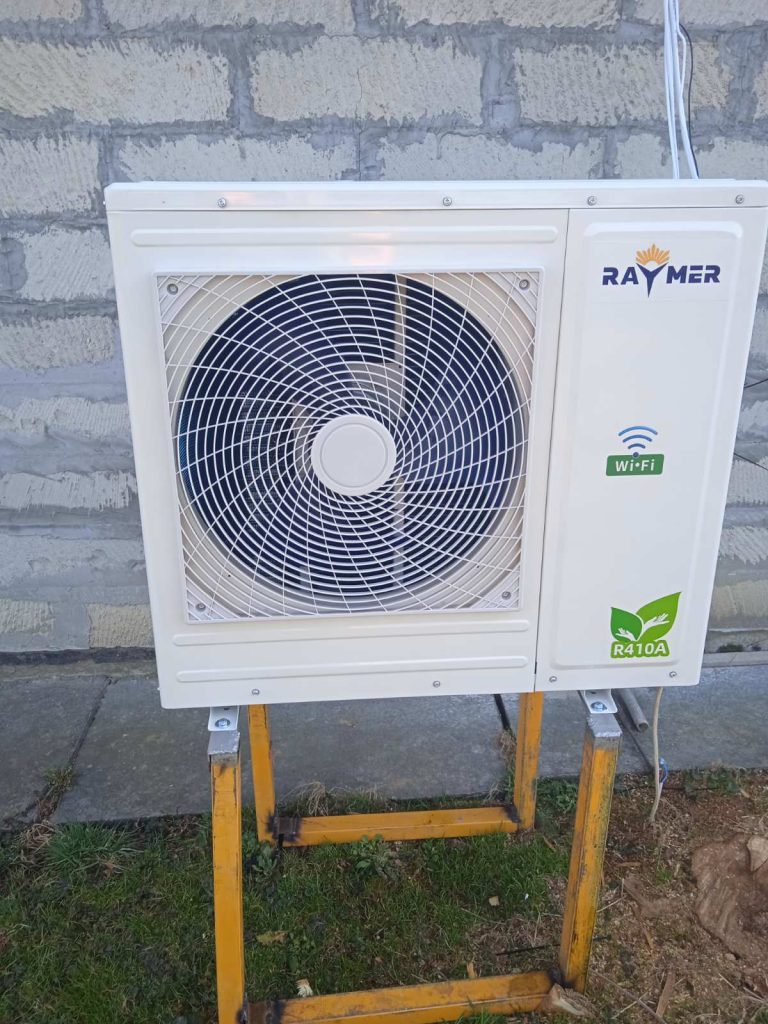
Taking into account all the features of the designed heating system, compatibility with underfloor heating, it was decided to install a heat pump Raymer RAY-15DS1-EVI, which is capable of operating at sub-zero temperatures down to -30°C, and can also provide hot water and cooling in summer.
This heat pump is also distinguished by its energy efficiency: на 1 kW of consumed electricity it gives out 4,82 kW thermal energy.
Hot water will be supplied using a Raymer DHWP indirect heating tank 200, and also for more efficient accumulation of coolant in the system, a Raymer storage tank will be installed on 100 l.
Equipment installation steps
After analyzing the house design, location of adjacent communications (water, electricity, sewage) a thorough installation plan for the heating equipment has been developed and a location has been selected with the appropriate requirements for the proper operation of the heat pump and all auxiliary system components.
1. Outdoor unit installation
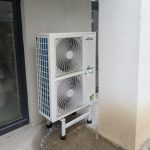
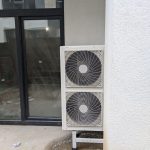
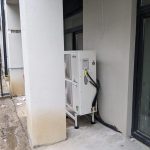
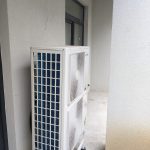
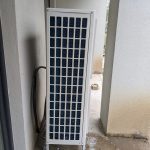
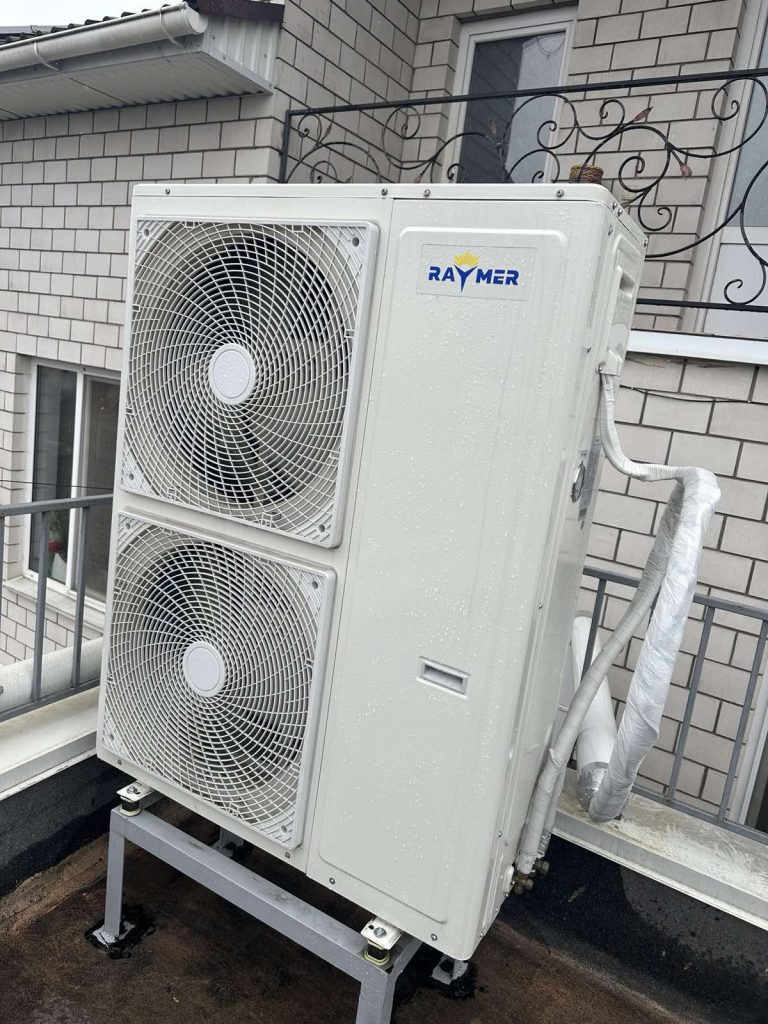
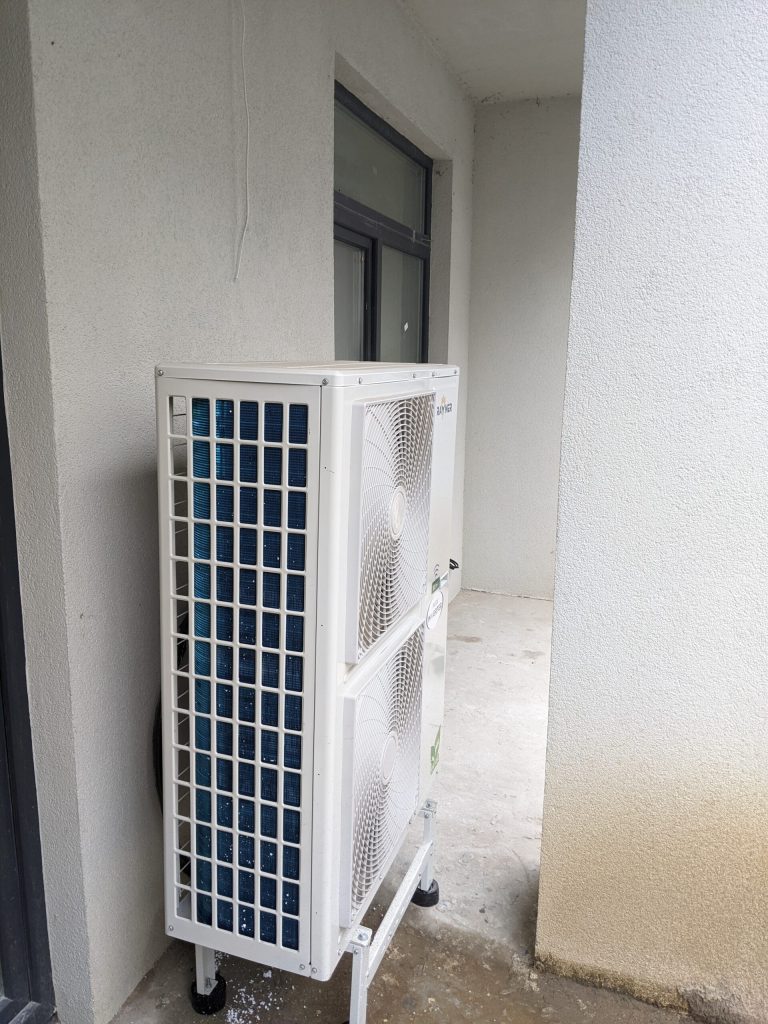 The outdoor unit of the heat pump was installed on a reliable base with anti-vibration supports, ensuring structural stability and reducing vibrations during operation. The installation location was chosen taking into account ease of maintenance and maximum system efficiency.
Thanks to high quality anti-corrosion coating, there was no need for additional protective structures against the effects of adverse weather conditions.
The location of the block behind the column allowed us to maintain the aesthetic appearance of the house, ensuring sufficient ventilation and air access for stable operation of the heat pump.
2. Installation of the indoor unit
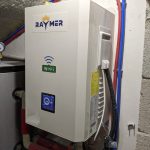
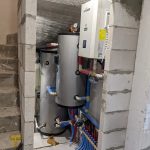
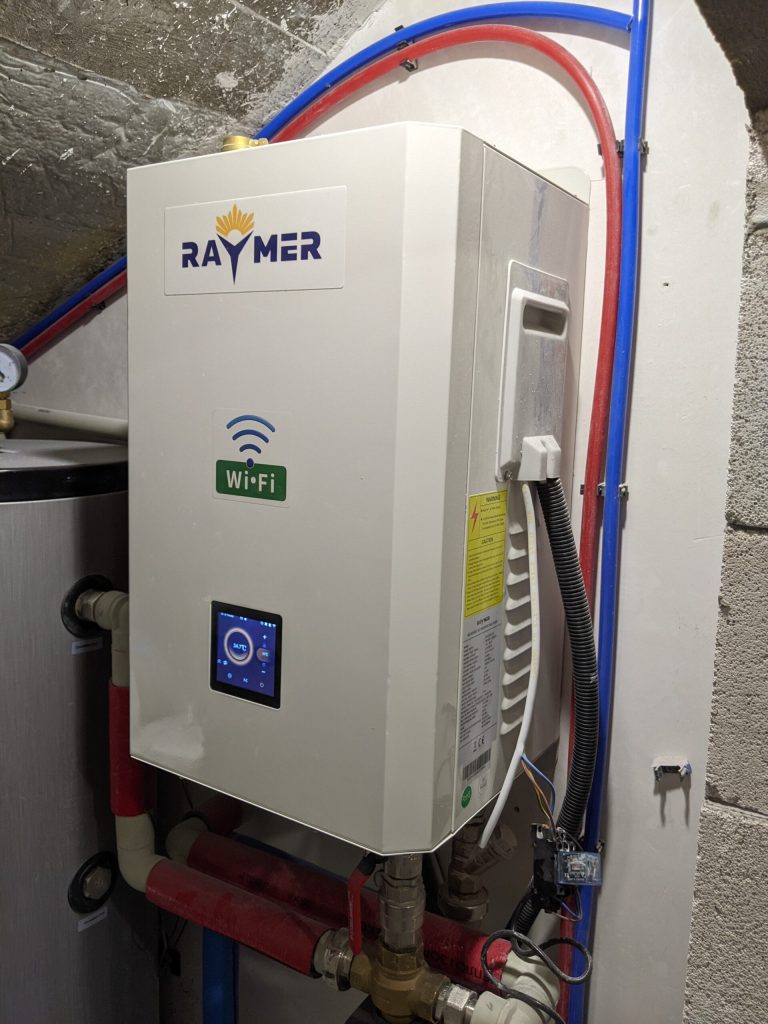 The indoor unit is installed on the prepared surface using reliable fasteners, that would support the weight of the hydraulic module and connections.
The placement takes into account the manufacturer's specifications for clearances for ventilation and access to components for maintenance.
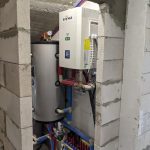
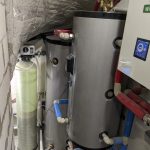
The hydraulic module is connected to the indirect heating tank and the storage tank through a three-way valve, which distributes coolant flows between tanks, thus switching the operating modes of the heat pump.
The freon line is connected to a hydraulic module with reliable insulation, protecting pipes from damage and freon leakage.
3. Providing hot water supply
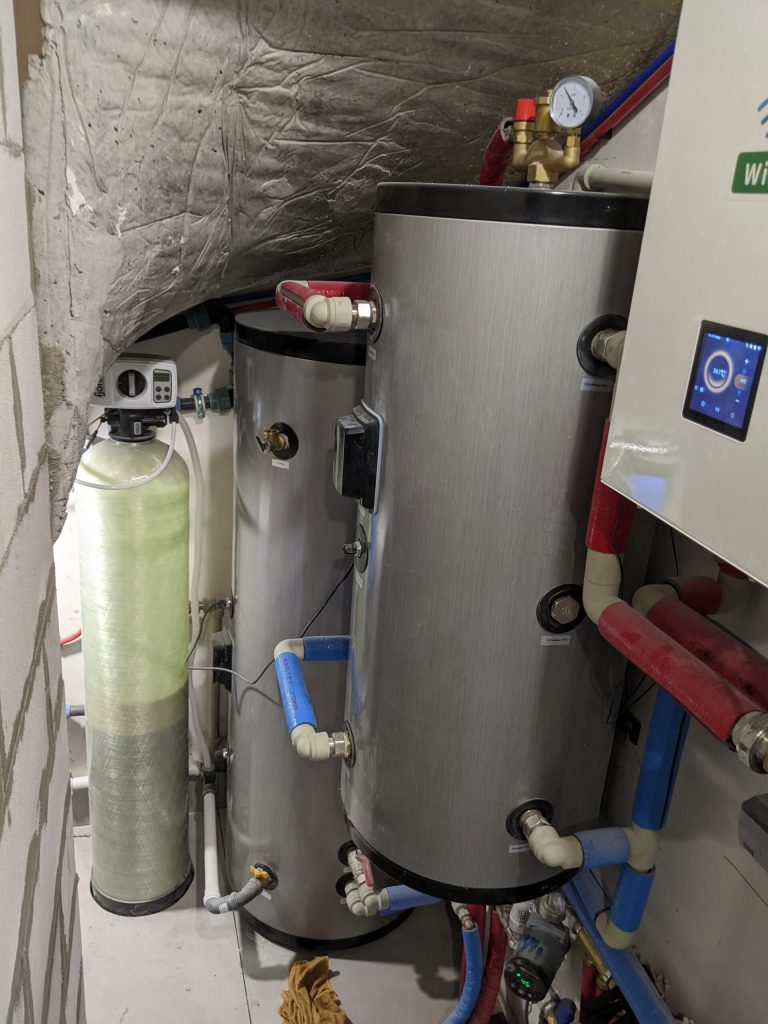 So, as a heat pump RAY-15DS1 EVI has the ability to connect and control DHW, without thinking for a long time, it was decided to install a Raymer DHWP indirect heating tank 200, Made of stainless steel and has a long service life. And a 20-meter coil inside the boiler promotes efficient heat transfer, providing fast heating and constant supply of hot water.
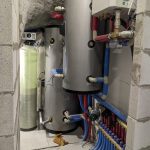
The hot water tank was installed on the floor behind the storage tank, so that water supply pipes can be laid compactly and have access to their maintenance.
4. Installing a storage tank in a heated floor system
The installation of the storage tank was installed close to the heated floor comb, so that the coolant circulates uninterruptedly in the underfloor heating system without heat loss.
The storage tank is installed for correct operation of the heat pump in heating mode, thanks to which there will be many advantages: defrost function – hot water supply, additional energy savings in the off-season, sediment from the system will be in the tank, not in the heat exchanger, large hydraulic arrow function – the pump does not like cold reverse circulation, for this he needs a mixer, the function of which is performed by the storage tank.
5. Additional system components
In the Raymer RAY-15DS1 EVI heat pump system, the three-way valve and circulation pump play an important role, ensuring efficient operation of heating and hot water supply.
Three-way valve responsible for automatic control of coolant flows between different circuits: heating and hot water supply system (DHW). When the priority is heating water in the boiler, the valve switches the coolant flow to the boiler, which allows for the most efficient use of heat for hot water supply. After reaching the required temperature in the boiler, the valve returns the coolant to the heating system, maintaining a comfortable temperature in the house. This ensures smooth operation of the system, allowing automatic switching between room heating and water heating modes.
Circulation pump ensures constant circulation of coolant throughout the system. It maintains the smooth flow of coolant through the heat pump heat exchanger and transfers heat to the heated floor. Thanks to continuous pump operation, the system distributes heat evenly in all rooms of the house, maintaining stable temperatures and maximum heating efficiency.
Both components, three-way valve and circulation pump, ensure optimal operation of the heating system. They not only automate the process of switching between modes, but also maintain a constant and uniform heat supply, which increases the overall energy efficiency and comfort of using the heat pump system.
6. Controller setup
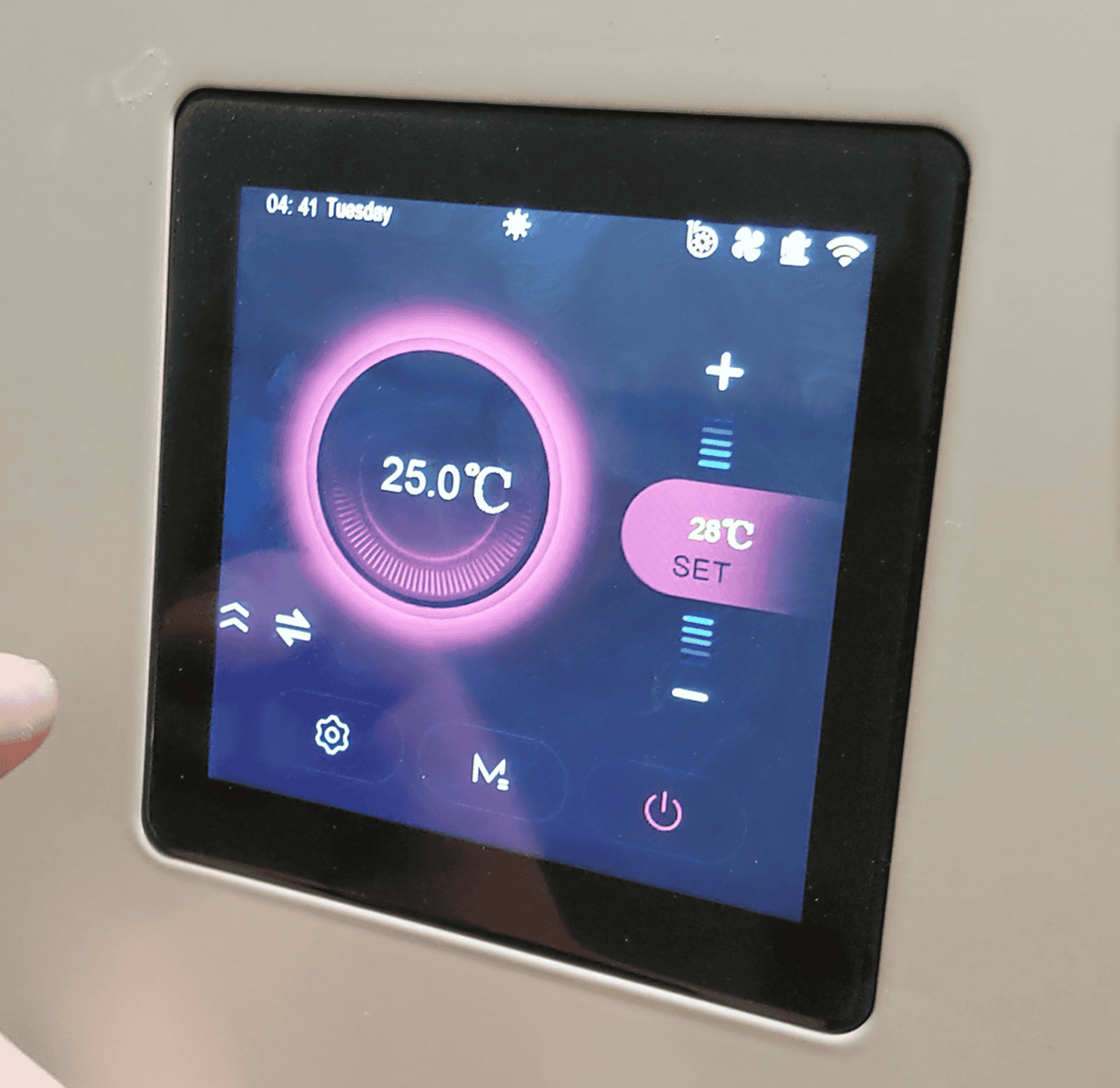 The controller receives data from various sensors, installed on the system. Sensors measure inlet and outlet water temperatures, return and exhaust gas temperature, ambient temperature, as well as the temperature of the evaporator and condenser coils. Pressure indicators are also monitored using high and low pressure sensors.
The controller analyzes the received data to determine the current state of the system. Based on this data, it regulates the operation of the heat pump components to achieve optimal efficiency and maintain set parameters. This includes water and air temperature control, as well as system pressure.
The system monitors the operation of the heat pump for possible emergency situations. If such situations arise, For example, overheating or exceeding permissible pressure, the controller can automatically turn off individual components to prevent damage.
Features of the Raymer RAY-15DS1 EVI heat pump:
Energy Saving
A heat pump is an energy-saving heating solution. Heat pump heating systems can save up to 80% electricity compared to traditional methods. This occurs by using heat from the environment for heating instead of directly producing heat.
Comparative analysis shows, that even in cold conditions the heat pump is able to operate efficiently, providing warmth in the house while reducing energy consumption.
Ecological cleanliness
Particular attention should be paid to the environmental friendliness of the heat pump. The use of R410a freon makes it an environmentally friendly option. Reduced CO2 emissions help combat climate change and make the pump more resilient to environmental challenges.
Quiet operation and comfort:
- Raymer heat pump has silent operation, which allows its use in various residential premises, without disturbing comfort.
- The built-in cooling function in the standard version of the pump ensures a pleasant indoor microclimate even in the hot season.
Inverter technology
Inverter technology in the heat pump allows the pump power to be adjusted depending on actual needs. It means, that it operates at maximum efficiency, adapting to changes in external conditions.
The advantages of such a system are more stable and comfortable heating, as well as additional energy savings.
EVI technology
EVI technology (Enhanced Vapor Injection) in the heat pump Raymer RAY-15DS1-EVI is an improved feature, which increases the efficiency and performance of the heat pump, especially in low temperature conditions. EVI technology works by injecting additional steam into the compression process, allowing the heat pump to maintain higher levels of efficiency even when operating in colder climates.
In a standard heat pump, when the outside air temperature decreases, COP, usually, is decreasing. However, with EVI technology, the heat pump can optimize its performance by regulating the refrigerant flow and injecting additional steam. The result is increased thermal output and efficiency, which makes the heat pump more suitable for operation in winter conditions.
Remote access via Wi-Fi
The pumps are equipped with a remote access function via Wi-Fi. It means, that you can control the pump and monitor its operation using a smartphone or computer from anywhere, Where can I get access to the Internet.
Reliability and durability
Heat pump Raymer RAY-15DS1-EVI 380V 15 kW split system, is characterized by high reliability and durability. Modern technologies and high-quality materials ensure long service life of the equipment.
The experience of using the pump is confirmed by positive user reviews, who note the stability of work and level of comfort, provided by this equipment.
Benefits of installing Raymer RAY-15DS1-EVI for the customer
Installing a heat pump brings a number of important benefits to the customer:
Saving on energy consumption: Heat pumps use minimal electricity to convert heat from the air or ground. This allows you to significantly reduce heating costs compared to traditional electric boilers or gas boilers.
Comfort at any time of the year: Heat pumps provide both heating in winter, and cooling in summer, allowing you to maintain optimal temperature in your home throughout the year.
Environmental friendliness: Heat pumps run on renewable energy sources, reducing CO2 emissions and contributing to the environment.
Reliability and long service life: Modern heat pumps have high reliability and long service life, ensuring stable operation of the heating system for many years.
Automation and easy control: Modern heat pumps are equipped with intelligent control systems, including control via smartphone, which makes it easy to control the operation of the system from anywhere.
All in all, installation of the Raymer RAY-15DS1-EVI heat pump provides financial benefits to the customer, comfort and environmental benefits.