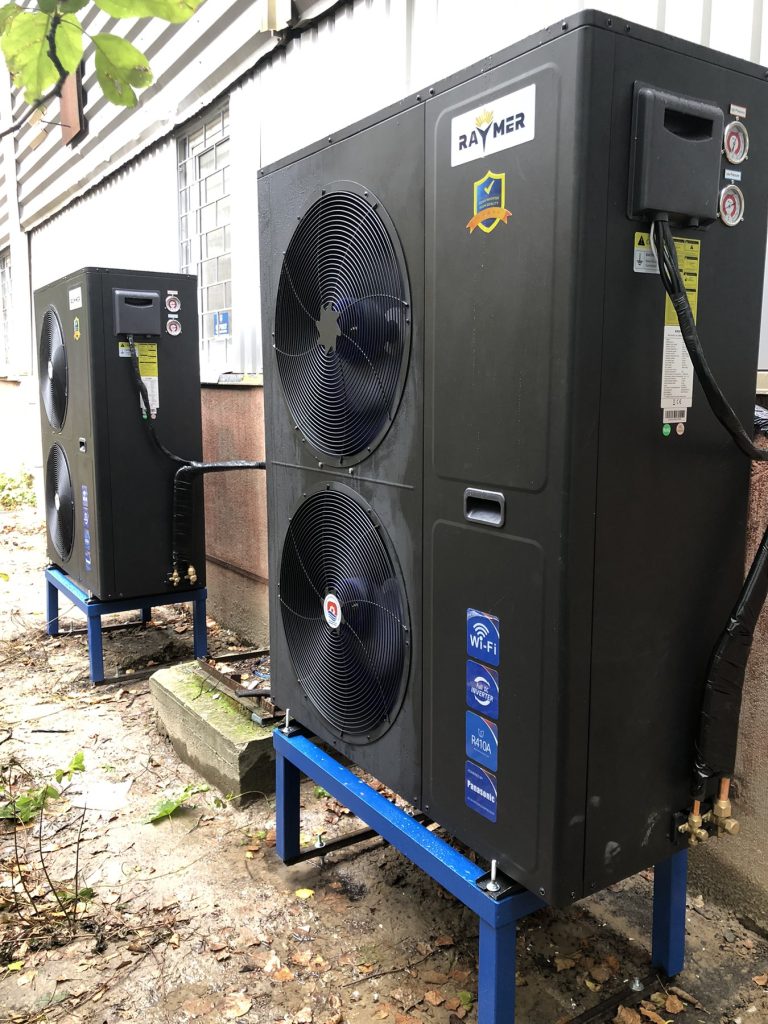
Task:
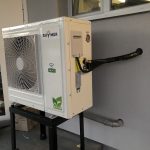
Our engineers were faced with the task of converting an existing system with a monoblock heat pump to a system with an antifreeze solution, to avoid system freezing at sub-zero temperatures.
Answer:
So, how it was impossible to fill this system with antifreeze solution, since this is not provided for by the technical characteristics of the monoblock, since a water heat exchanger is mounted inside the unit, an absolutely non-standard decision was made to move the heat pump heat exchanger into the house.
Stages of work execution
1. Dismantling the heat exchanger
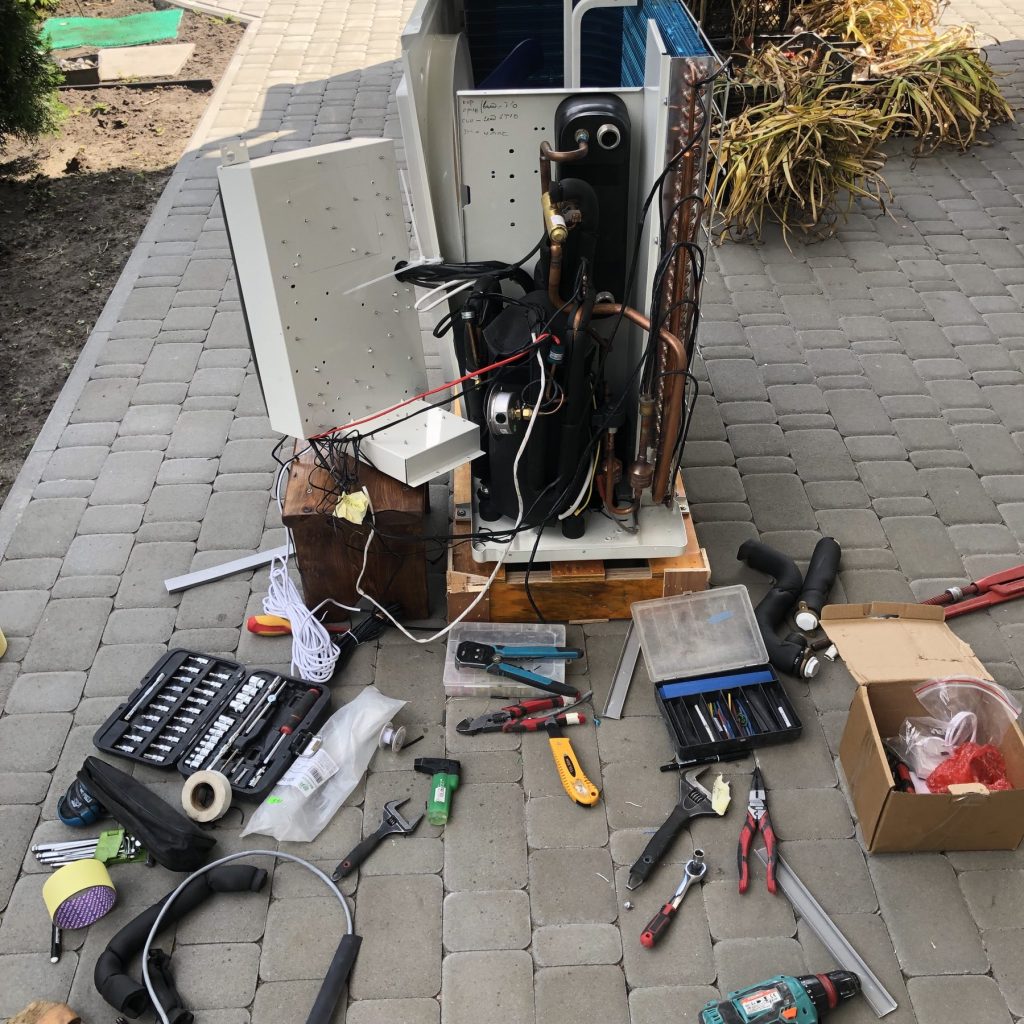 First of all, our engineer removed the heat exchanger from the heat pump monoblock, so that you can move it into the house and install it in the heating system already in the house.
The pipelines were previously disconnected, supplying and discharging coolant to and from the heat exchanger.
Typically the connection contains several threaded or quick-release connections, which must be unscrewed very carefully, to avoid damaging threads or seals.
2. Installation of a heat exchanger in a heating system
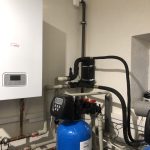
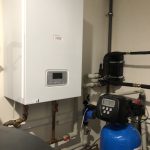
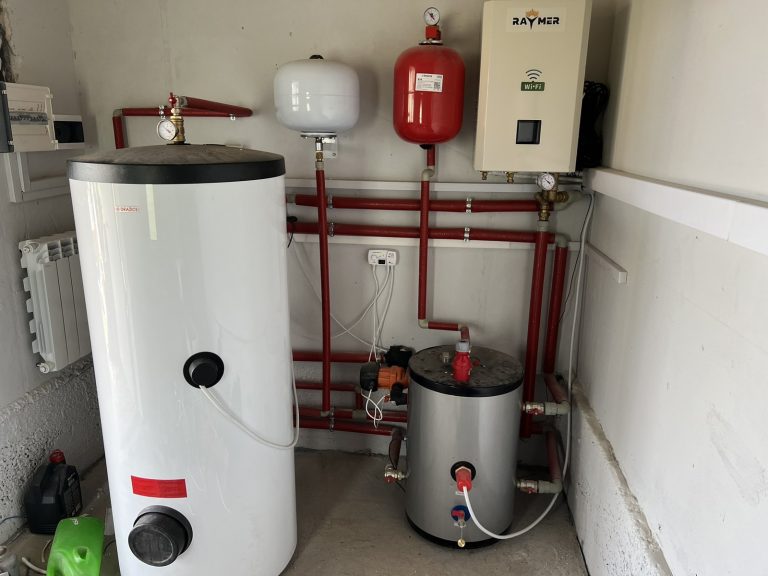
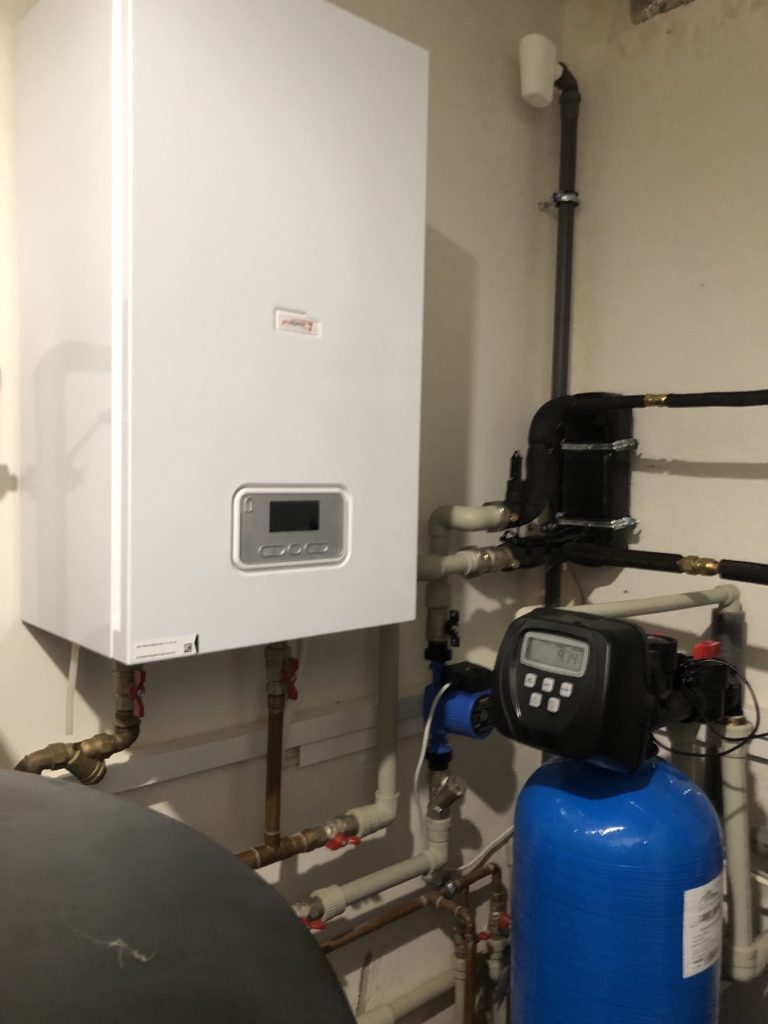 The heat exchanger was brought into the house and installed in the direct and reverse coolant supply system. Pipes with coolant from the outdoor unit are also connected to the heat exchanger. The heat exchanger is well insulated, to avoid water leakage from the system.
The heat exchanger was installed at a minimum distance from the circulation pump, to prevent overload of the circulation pump.
3. Freon line laying
A freon line was laid between the heat exchanger and the outdoor unit, which is reliably insulated to protect against external damage.
From now on, the coolant circulates only inside the house between the heat exchanger and the system, which prevents its contact with the environment.
Now the system can operate in conditions, when the use of antifreeze is initially impossible due to the technical characteristics of the heat pump.
4.Setting up and starting the system
After connection, you need to configure the heat pump parameters, circulation pump and temperature conditions for the buffer tank and underfloor heating system. The system was launched and checked for stability.
This connection scheme allows for stable heating of the room., accumulating excess heat in a buffer tank and evenly distributing it through the underfloor heating system, which increases overall heating efficiency.
Main characteristics of the air-to-water heat pump Raymer RAY-10MN
The Raymer RAY-10MN heat pump is a modern and highly efficient solution for heating a private home. Here are the main characteristics of this pump:
High efficiency
Raymer RAY-10MN has a high performance ratio (COP), which allows you to significantly save on heating costs. It uses a minimum of electricity to achieve maximum heat output.
Environmental friendliness
The heat pump uses natural energy sources, which reduces greenhouse gas emissions and makes the system environmentally friendly.
Easy to maintain
Modern technologies, used in the Raymer RAY-10MN heat pump, provide ease of maintenance and high system reliability.
Wide operating temperature range
The heat pump can operate efficiently over a wide temperature range, which ensures its stable operation even in difficult climatic conditions.
Conclusion: benefit for the client
Installing a heat pump, the customer receives a number of benefits, which make this heating option attractive and efficient:
Energy savings: The heat pump uses energy from renewable sources, such as air, water or soil, which allows you to significantly reduce heating costs compared to traditional gas or electric systems.
energy efficiency: Heat pumps have a high energy conversion rate (COP), which means, that they can generate more heat, what they consume electricity. This makes them one of the most efficient heating systems.
Versatility: A heat pump can do more than just heat your home in winter, but also to ensure its cooling in the summer, which reduces the need for air conditioning.
Environmental friendliness: Using heat pumps helps reduce CO2 emissions and dependence on fossil fuels, which has a positive impact on the environment.
Independence from fuel prices: Because the heat pump uses energy from the environment, the customer is less dependent on fluctuations in prices for gas or other traditional energy sources.
Comfort and automation: Modern heat pumps are equipped with automatic control systems, allowing you to customize them to individual needs and provide stable comfort in the home.
Long service life: Heat pumps are known for their durability, which allows you to use the system without the need for frequent repairs or replacements.
Thus, the customer receives effective, reliable and economical heating and cooling system, which is also environmentally friendly.